DRAFT · Community review in progress. See something that looks wrong? Tell us.
Español English
Community Dashboard
Primary June 2, 2026
Updated May 20, 2026
Member Portal
This guide is free. If it helps you, help us keep it going.Support our work
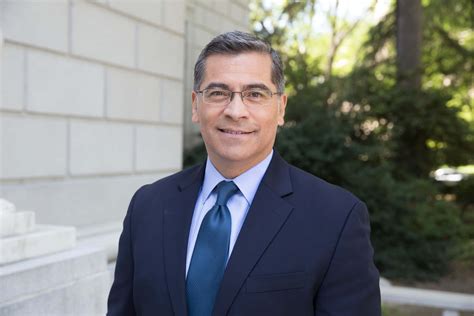
Xavier Becerra
Campaign or press photo
Democrat · Among the frontrunners · polling in the high teens to low twenties

Xavier Becerra

Becerra is a former federal Secretary of Health and Human Services, a former California Attorney General, and a U.S. representative for 24 years, and he is the son of Mexican immigrants from Sacramento, which is part of why so many of our families recognize his story. The main argument he carries into this race is his record of 122 lawsuits against Trump 1.0 and his work implementing IRA drug pricing, and his career is the longest in the 2026 field, which cuts both ways because a long record means a long list of decisions to examine.

What the badges mean
Corporate moneyFunded by corporate PACs and big donors
Criminalize povertyBacks criminal penalties tied to homelessness
Defends immigrantsWants to limit or prosecute ICE in California
Grassroots-fundedRuns on small donors, no corporate or billionaire money
Healthcare for allBacks single-payer healthcare for everyone
Police powerComes from or is backed by police and sheriff power
Pro-ICEWants more state cooperation with ICE
Raise wagesBacks raising the minimum wage
Real estate moneyFunded by real estate and developers
Self-fundedBankrolled by their own personal fortune
Tax the wealthyBacks taxing extreme wealth
Tenant sideBacks rent control and tenant protections
Raised
$5.99M
Spent
$8.18M
Cash
$507K
Suits vs. Trump 1.0
122

He was born on January 26, 1958 in Sacramento, California, the third of four children of Manuel Becerra, a construction and road worker who grew up in Tijuana, and Maria Teresa Becerra, a clerk and secretary who grew up in Guadalajara, and he was the first in his family to earn a four-year college degree. He graduated from C.K. McClatchy High School, earned a B.A. in economics from Stanford in 1980 and a J.D. from Stanford Law in 1984, and he is married to Dr. Carolina Reyes, an OB-GYN trained at Stanford and Harvard Medical, with whom he has three daughters, Clarisa, Olivia, and Natalia.

He started his public career as Deputy Attorney General of California under AG John Van de Kamp from 1987 to 1990, and he was elected to the California State Assembly for the 59th District in 1990, where he served a single term from 1991 to 1992. In 1992 he won a U.S. House seat, where he went on to serve 24 years across 12 consecutive terms from 1993 to 2017, representing the CA-30, CA-31, and CA-34 districts of Los Angeles, and in 1997 he joined the powerful Ways and Means Committee, becoming the first Latino to serve on it. He served as Vice Chair of the House Democratic Caucus from 2009 to 2013 and then as Chair from 2013 to 2017, becoming the second Hispanic American to lead the caucus.

In January 2017, Governor Jerry Brown appointed him to fill the seat of California Attorney General when Kamala Harris was elected to the U.S. Senate, and he was then elected to a full term in November 2018. As AG, his office filed 122 lawsuits against the first Trump administration over four years, including nine lawsuits on January 19, 2021, which was Trump's last day in office, and he defended AB 5, the gig worker classification law, against industry challenges before he left the office in March 2021.

On March 18, 2021, the U.S. Senate confirmed him as Secretary of Health and Human Services by a vote of 50 to 49, with Susan Collins of Maine the only Republican to vote yes, and he took office on March 19, 2021 and served until January 20, 2025, becoming the first Latino Secretary of HHS and the 25th Secretary overall. While he was there he led the implementation of the Inflation Reduction Act's drug price negotiation authority, and he announced his run for governor on April 2, 2025, framing his run as a fight to reclaim a California Dream he says is "slipping away."

Becerra has the longest elected and appointed record in the 2026 field, because he has spent essentially all of his adult life in elected or appointed public service, from state prosecutor at 29 to Cabinet Secretary at 67, so the question is not whether he has been in power, since he clearly has, but rather how he used that power once he had it.

The key number is 122, because as California Attorney General his office filed 122 lawsuits against the first Trump administration over four years, and nine of those lawsuits were filed on Trump's last day in office, January 19, 2021, including cases that defended the Clean Air Act, protected endangered species in the Sacramento and San Joaquin rivers, and defended protections for undocumented California residents, which is the most concrete defense line against Trump 2.0 federalism that any candidate in this field can point to.

YearsOfficeWhat he did with that power
2021-2025U.S. Secretary of Health (HHS) (Biden Cabinet)First Latino Secretary of HHS, 25th Secretary. Confirmed 50-49 (Collins was the only Republican yes). Led implementation of IRA negotiated drug prices: the first round of 10 Medicare Part D drugs achieved prices 38-79% below list, effective January 2026, with ~$6B estimated savings. CMS announced 15 additional drugs for the second round.
2017-2021California Attorney General122 lawsuits against Trump 1.0. Appointed by Brown in 2017 to fill Harris's seat when she won the Senate. Elected to a full term in 2018. Defended AB 5 against the gig industry. Filed nine lawsuits in one day (January 19, 2021).
1993-2017U.S. Representative · 12 terms · CA-30, CA-31, CA-34First Latino on the Ways and Means Committee (1997). Chair of the House Democratic Caucus (2013-2017). Co-sponsored the ACA. Voted NO on the 2002 Iraq War Authorization. His House votes from the 1990s, including on the 1994 federal crime legislation, are now scrutinized.
1991-1992California State Assembly, District 59Single term. Authored bills on voter registration in schools, school gang penalties, sports equity for girls, ban on English-only workplace requirements.
1987-1990Deputy Attorney General of CaliforniaStaff prosecutor under AG John Van de Kamp.

These are the topics Becerra covers in his campaign, and then the concrete promises he has made, because what matters is not just what a candidate talks about but what a governor could actually deliver, and for every promise there is a point where the office runs into a hard limit.

Areas he covers

Fight Trump Healthcare / "build toward single-payer" Energy and utilities Reproductive freedom Housing as infrastructure Education Immigration / Medi-Cal undocumented Drug prices (IRA legacy) Affordability / "California Dream"

The five most concrete promises

Promise · Trump opposition
"I've faced and beaten Trump 122 times"
The central argument here is his proven record of litigation against the first Trump administration when he was California AG, and the promise is that he would scale that state defense authority against Trump 2.0 from the governor's office.
Becerra's defense: he argues that the number 122 is verifiable and that no other candidate in the 2026 field has this level of experience litigating against Trump federalism, and he points out that he already has working relationships with every Democratic state attorney general in the country and that he knows the mechanics of coordinating multistate lawsuits.
What a governor can actually do

A governor can direct the state AG to file specific lawsuits, can use state regulatory authority to resist federal preemption, can appoint judges and agency heads who are positioned to defend California policy, can coordinate with other Democratic states, and can submit amicus briefs.

Hard limit

The hard limit is federal supremacy, because the state can litigate but cannot override federal law, and it matters that the AG, not the Governor, is the one who files the litigation, so a Governor Becerra would have appointment power but no direct control over the litigation, since the AG's office is separate and is elected independently.

Impact for our community if delivered

For SELA neighbors with mixed-status families, Becerra's litigation record against ICE, which includes suits defending SB 54 sanctuary protections, is directly relevant, and his record as AG includes protections for DACA, defense against TPS terminations, and blocks of Trump-era anti-immigrant rules, but it is worth remembering that the authority for all of this belongs to the AG's office and not to the governor's.

Promise · Healthcare
"Build toward a universal single-payer system"
He says he wants to build toward a universal single-payer system that puts people before profits, strengthen Medi-Cal, and close racial and economic gaps, and the "build toward" language matters here because it is not the same as a commitment to sign single-payer legislation right away.
Becerra's defense: he points out that in the House he co-sponsored single-payer bills including H.R. 676, and that as HHS Secretary he implemented the IRA drug price negotiation, which achieved prices 38 to 79% below list for 10 drugs, and he argues that he is the candidate with real, hands-on experience implementing drug pricing reform.
What a governor can actually do

A governor can sign single-payer enabling legislation if the Legislature passes it by two-thirds, can direct DHCS to strengthen Medi-Cal access and eligibility, can seek federal 1115 and 1332 waivers, and can pursue zero copays and zero premiums for expanded Medi-Cal.

Hard limit

The hard limit is that single-payer in California would require a constitutional amendment, because it conflicts with the Prop 98 funding formula, or a two-thirds vote of the Legislature, or federal waivers under ERISA and Medicare, and AB 1400 in 2022 failed without even reaching a floor vote, while the fiscal scale is $300 to $400 billion annually, so opposition from the American Medical Association and from the CMA, which endorsed Becerra, are material political obstacles.

Impact for our community if delivered

SELA neighbors include large uninsured and underinsured populations, many of them in mixed-status families, but at the May 5 CNN debate, Becerra refused to commit to single-payer and instead backed "all paths to universal coverage," which is why Porter called his answer "disqualifying" and why Steyer pointed out that the CMA, the strongest group against single-payer in the state, endorsed Becerra, so the practical question that neighbors are left with is whether a Governor Becerra would actually sign a single-payer bill if the Legislature passed one.

Promise · Reproductive rights
"California keeps leading on protecting abortion access"
He wants to defend abortion access, protect providers and patients, expand Medi-Cal coverage for abortion, and defend patients who travel from out of state to receive care.
Becerra's defense: he carries a 100% NARAL record from his time as a U.S. representative, as AG he filed multiple suits against Trump-era abortion restrictions, and as HHS Secretary he led the post-Dobbs implementation of EMTALA emergency protections, and his wife, Carolina Reyes, is an OB-GYN.
What a governor can actually do

A governor can sign provider protection legislation, can expand Medi-Cal abortion coverage, can protect out-of-state patients who seek care in California, and can rely on the AG to litigate against extradition attempts from hostile states.

Hard limit

The hard limit is that the state cannot override federal abortion law if Congress acts, and the resources needed to expand provider capacity require appropriations.

Impact for our community if delivered

SELA families include many people who rely on abortion protections under Medi-Cal, so continuing and expanding that coverage is directly relevant to them, and for undocumented residents, abortion coverage under the expanded Medi-Cal that became effective in January 2024 closes an important gap.

Promise · Housing
"Treat housing as essential infrastructure"
He says he wants to treat housing as the essential infrastructure that it is, increase production, and reform CEQA, although the specific tenant protection commitments are not detailed on his campaign site.
Becerra's defense: he points out that as AG he defended state housing laws against NIMBY city challenges, and that his federal experience includes HUD coordination, so his argument is that he is not a novice when it comes to the mechanics of housing.
What a governor can actually do

A governor can sign CEQA reforms, can direct HCD, the Department of Housing and Community Development, to enforce RHNA, the Regional Housing Needs Assessment, and can appoint pro-supply commissioners.

Hard limit

The hard limit is that local zoning autonomy is protected under the California Constitution, and that repealing Costa-Hawkins, the 1995 state law that caps local rent control, requires either legislative action or a successful ballot measure, and Prop 33 failed in 2024.

Impact for our community if delivered

The immediate needs of renters in SELA are eviction protection and rent control, and Becerra's platform is thin on specific tenant protection commitments, because it does not include an explicit commitment to statewide just-cause eviction and it does not include a commitment to repeal Costa-Hawkins, so compared to Porter, who backs just-cause and Costa-Hawkins reform, or Steyer, who backs breaking up the IOUs and Prop 13 reform, Becerra's housing plan is the most conservative in the Democratic field.

Promise · Immigration
Defend Medi-Cal for undocumented, defend sanctuary
He wants to defend Medi-Cal for undocumented residents, defend sanctuary protections, and litigate against federal immigration enforcement, meaning ICE, and he points to his AG record as the proof that he can.
Becerra's defense: he points out that as AG his office litigated multiple cases defending SB 54 and sanctuary protections, and that as HHS Secretary he defended immigrant eligibility for federal health programs, and he argues that he is the candidate with the most direct experience fighting DHS over immigration rules.
What a governor can actually do

A governor can direct the AG to pursue state law theories, can withhold cooperation under SB 54, can firewall DMV data, can back legal defense funds, and can appoint agency leadership that will sustain the firewall.

Hard limit

The hard limit is that the federal Supremacy Clause limits state prosecution of federal officials, and this is also where Becerra's HHS record is vulnerable, because as HHS Secretary his ORR, the Office of Refugee Resettlement, failed to maintain contact with more than 85,000 unaccompanied migrant minors who had been released to sponsors during a historic surge, which is laid out in full in the second attack.

Impact for our community if delivered

Becerra's immigration record splits in two directions, because as AG he was among the most active Trump-era enforcement litigators in the country, which protected immigrant families in SELA, while as HHS Secretary he oversaw the agency responsible for the welfare of unaccompanied minors during a historic surge, and the documented failures there are the most serious attack his opponents have, so neighbors are left to decide how the first part of that record weighs against the second.

These are the five most serious attacks Becerra has faced in this campaign, and for each one we have summarized his defense, laid out the facts as we investigated them, walked through what it would mean for our community, and named the places where the defense actually has merit, because an honest profile has to do all four.

Attack 1 · Chief of staff fraud
Sean McCluskie, his chief of staff for 20+ years, pleaded guilty to fraud in November 2025
Becerra's longtime chief of staff diverted about $225,000 from Becerra's inactive state campaign account while Becerra was HHS Secretary, and Newsom's former chief of staff Dana Williamson pleaded guilty in the same scheme in May 2026, which is why it raises real questions about how closely Becerra was watching his own committee.
Becerra's defense: he says "it happened outside my line of sight," and he told The Hill that the Department of Justice did not brief him on the full case against McCluskie, and he points out that the indictment does not implicate him, since bosses are not typically liable for employee fraud committed without their knowledge.
The facts as we investigated them

The indictment in this case was unsealed in November 2025. On November 20, 2025, Sean McCluskie, Becerra's chief of staff at AG and HHS, pleaded guilty to one count of conspiracy to commit bank fraud and wire fraud. His co-defendants were Dana Williamson, Governor Newsom's former chief of staff, and lobbyist Greg Campbell, who also pleaded guilty. On May 14, 2026, Williamson pleaded guilty to three of the 23 felony counts she faced, including conspiracy to commit bank fraud and wire fraud, filing a false tax return, and making false statements to a federal agent. Prosecutors said roughly $225,000 was diverted from Becerra's inactive state campaign account between February 2022 and September 2024, funneled through business entities and disguised as pay for a no-show job for McCluskie's spouse to subsidize his bicoastal living costs after he followed Becerra to Washington. The three defendants jointly agreed to $225,000 in restitution. McCluskie and Campbell are scheduled to be sentenced on June 4, 2026, two days after the primary; a status conference on Williamson's sentencing is set for July 9, 2026. The indictment does not implicate Becerra, and Becerra is not charged. McCluskie worked for Becerra for more than 20 years, from the House, AG, through HHS.

Community impact if the critique holds

The factual core of this is documented and serious, and at the same time Becerra is not charged and the indictment does not place him in the conspiracy, so the fairest critique is about oversight, because a chief of staff drained a campaign account for more than two years without being detected, which means neighbors who are worried about managerial competence and about trust in key appointments should note this while distinguishing it from direct embezzlement, and the fact that two longtime chiefs of staff, one of Becerra's and one of Newsom's, are co-defendants suggests a network rather than a single isolated subordinate.

Why the defense has merit (partial)

Bosses are not typically liable for employee fraud committed without their knowledge, Becerra is not charged, and the theft was discovered only after he had already left federal service, so while the duration of the scheme, about 2.5 years, and its size, more than $225,000, raise legitimate questions about campaign finance oversight, none of that amounts to a criminal sentence against Becerra himself.

Attack 2 · Unaccompanied migrant children at HHS
85,000+ unaccompanied children out of contact under his HHS tenure
During Becerra's tenure as HHS Secretary, the Office of Refugee Resettlement, the ORR, failed to maintain contact with more than 85,000 unaccompanied migrant children who had been released to sponsors, and the Pulitzer-winning NYT series documented cases of minors who were placed with sponsors who then put them into dangerous work.
Becerra's defense: in May 2026, he called the "lost children" framing a "MAGA talking point," he argues that he inherited both the system and the surge, with roughly 144,000 unaccompanied child arrivals in 2021 against roughly 37,000 in 2020, and he draws a distinction between "lost contact," which is what the records show, and "missing" or "trafficked," which is not.
The facts as we investigated them

The NYT series by Hannah Dreier documented that HHS lost contact with thousands of unaccompanied minors after they were placed with sponsors, and the series won the 2024 Pulitzer Prize for Investigative Reporting, while 26 House Democrats sent Becerra a letter on May 25, 2023 about child labor exploitation and the Senate Judiciary Committee sent a document request letter on June 28, 2023, and a 2022 staff meeting recording later obtained by the NYT captured Becerra himself, pressing staff to release children from custody faster, saying, "If Henry Ford had seen this in his plants, he would have never become famous and rich. This is not the way you do an assembly line."

Community impact if the critique holds

In the HHS reporting, "lost contact" means that follow-up calls went unanswered, which is not the same as "missing" or "trafficked," so the base rate of re-contactability is a documented government accountability problem rather than proof that these children are necessarily unsafe, but the NYT also documented specific cases of minors who were placed with sponsors who put them into dangerous work, and that is a real failure of the placement and follow-up system rather than just a question of phone-call statistics, and although the 2021 surge, roughly 144,000 arrivals against roughly 37,000 in 2020, was driven by the post-Trump reopening, Central American gang violence, and a COVID-related processing collapse, the documented failures are materially concerning for immigrant families in SELA.

Why the defense has merit (partial)

HHS did fail to maintain contact with significant numbers of unaccompanied minors on Becerra's watch, and the accountability question is legitimate, since the NYT reporting documents real harm rather than just statistical artifacts, but the "thousands of children trafficked" framing overstates the precise numbers and conflates "could not be reached by phone" with "trafficked," and Becerra inherited an existing program and an unprecedented surge, and his response was to expand resources and improve procedures, with the GAO reporting improvements by 2023, so neighbors who are concerned about executive competence in complex crises should note the early-tenure gaps, while neighbors who see this as a partisan attack should note that the NYT series is independent investigative journalism rather than a campaign attack.

Attack 3 · Single-payer hedging
Hedged on single-payer at the May 5 CNN debate
Becerra says he supports Medicare for All, but at the CNN debate he refused to commit to single-payer and instead backed "all paths to universal coverage," which looks like a change, and critics read it as evidence that he is hiding healthcare centrism after winning the CMA endorsement.
Becerra's defense: he says "I haven't changed. And so those reports were inaccurate," he points out that his campaign healthcare page still uses the phrase "build toward a universal single-payer system," and he notes that in the House he co-sponsored single-payer bills including H.R. 676.
The facts as we investigated them

KQED reported that Becerra walked back his single-payer support while courting the California Medical Association endorsement, and at the CNN debate Becerra said, "I haven't changed. And so those reports were inaccurate," while Porter called his single-payer answer "disqualifying" and Steyer noted that the CMA, which he called "the strongest group against single-payer healthcare in the state," had endorsed Becerra, and it is worth noting that the CMA has historically opposed AB 1400 and prior single-payer efforts.

Community impact if the critique holds

Neighbors who worry about whether he would actually sign a single-payer bill should weigh his record against his donor coalition, and this matters because universal healthcare is one of the highest priorities in community surveys in SELA, while neighbors who worry instead about competent healthcare governance would be getting a Cabinet veteran who actually implemented IRA drug pricing, which is valuable in its own right even if single-payer never happens.

Why the defense has merit (partial)

Becerra's House record is genuinely pro-single-payer, his campaign page genuinely says "build toward single-payer," and his hedging at the debate is also genuine, but the CMA endorsement is incompatible with a credible threat to enact single-payer, so the most honest reading is that he is maintaining the rhetorical commitment while making the political compromises that keep him electable to the Democratic establishment coalition, and the historical pattern of centrist Democrats with insurance industry backing is real enough to keep in mind.

Attack 4 · Chevron and utility donations
$39,200 from Chevron + $153,000 lifetime from IOUs (PG&E, SCE, SDG&E)
Becerra accepts contributions from Chevron and from California's privately-owned utilities, the IOUs, and critics argue that taking that money compromises his climate and energy positions.
Becerra's defense: he argues that $39,200 from Chevron and $153,000 across the IOUs over a 24-year career is small relative to his total fundraising, that the donations are legal and disclosed, and that his record as AG includes environmental litigation against Trump 1.0.
The facts as we investigated them

Chevron contributed the maximum $39,200 to Becerra's 2026 gubernatorial campaign, according to E&E News / POLITICO, and across his career in Congress and as AG, Becerra received more than $153,000 from PG&E, Southern California Edison, and San Diego Gas and Electric, according to the Energy and Policy Institute, while the Steyer campaign publicly urged Becerra to return the contributions and a Los Angeles Times opinion piece (by Bill McKibben) was headlined "Xavier Becerra shows that his loyalty lies with fossil fuels."

Community impact if the critique holds

The $39,200 from Chevron and the $153,000 across the IOUs over a 24-year career is small relative to Becerra's total fundraising, and the donations are legal and disclosed, so the political significance really depends on what the voter already believes, because if you believe corporate donations significantly influence policy then this matters, and if you believe candidate platforms drive policy independently of the donor mix then it matters less, but for SELA neighbors who are already carrying pollution from the Wilmington refineries and the ports, the pattern matters because Southern California Edison's bills in SELA have gone up 60% in 5 years.

Why the defense has merit (partial)

The donations are documented and accurate, and the "loyalty lies with fossil fuels" framing overstates what $39K and $153K actually buy, since his record as AG includes environmental litigation against Trump, defending the Clean Air Act and filing suits against the methane rule rollback, but the contrast with Steyer, who rejects all corporate PAC money, is real, and neighbors can fairly value that contrast.

Attack 5 · Central target in debate
Central target of attacks at the May 5 CNN debate
Becerra was the May 2026 frontrunner and absorbed sustained attacks at the CNN debate, particularly on McCluskie, on single-payer, and on the Chevron donations, so the question of whether he can take primary heat is a real one for the general election.
Becerra's defense: he held the line on his core platform claims and called the lost-children framing a "MAGA talking point," and he argues that being the central target in a debate is a feature of frontrunner status rather than evidence of weakness in itself.
The facts as we investigated them

Multiple outlets characterized Becerra as the central target at the May 5 CNN debate, since Porter, Steyer, and Hilton all directed criticism at him, as the SFist debate coverage documents, and Becerra is among the May 2026 frontrunners, polling in the high teens to low twenties depending on the survey, with several polls showing him essentially tied with Steve Hilton and Tom Steyer, after Swalwell exited on April 12, 2026.

Community impact if the critique holds

Being the central debate target is a feature of frontrunner status rather than evidence of weakness in itself, and the substantive content of the attacks is already captured in the first four attacks, so for neighbors deciding their vote, the relevant attack is the substantive one rather than the structural fact of who got targeted in the debate.

Doesn't hold as a distinct attack

This is a structural observation about debate dynamics rather than a substantive attack, the underlying attacks are rated individually above, and if Becerra is the frontrunner then he will naturally receive more attacks than the other candidates, which is just primary math rather than evidence against him.

This section lays out who funds Becerra, who spends independent money for or against him, who has formally endorsed him, and how the outside organizations that apply their own scorecards have rated him, so that the money and the backing can be read together.

The money coming in

MetricAmountNotes
Total raised$5.99MThrough the April 18, 2026 reporting period. CA Gov Tracker.
Total spent$8.18MHigher than raised because it includes transfers from prior committees (Becerra for Congress, FEC C00264101).
Cash on hand$507KLow relative to Steyer ($179.9M) or Mahan ($14.6M + $15M IE).
Chevron$39,200Maximum primary contribution. E&E News / POLITICO.
IOUs (career total)$153K+Accumulated across Congress and AG from PG&E, SCE, SDG&E. Energy and Policy Institute.

Full itemization: CAL-ACCESS filer ID 1480025. FEC: Becerra for Congress C00264101 (federal residual).

External Independent Expenditures (IEs)

IE = Independent Expenditure: committees that spend for or against a candidate without legally coordinating with the campaign.

CommitteeDirectionAmountNotes
IE supportingFor~$461KAcross 38 transactions from 20 committees, small and diffuse, with no single large super PAC behind him (cagovtracker, reading CAL-ACCESS, synced May 20, 2026).
IE opposingAgainst$0No committee has reported independent spending against Becerra. The largest negative spending in the race targets Steyer.

Formal endorsements

External scorecard ratings

OrganizationTypeRatingLink
League of Conservation Voters (LCV)House lifetime record92%view
NARAL / Reproductive Freedom for AllLegislative record100% (2016) · co-sponsorship on recordview
California Medical AssociationEndorsementEndorsed (tied to M4A controversy)view
GovTrack (House)2013-2017 voting recordCompiledview
OpenSecretsCareer profileCompiledview
CalMatters Voter GuideProfileProfiled, no scoreview
BallotpediaProfileProfiledview
Sierra Club CaliforniaEnvironmental endorsementNo endorsement (endorsed Steyer)view
Courage California / Progressive Voters GuideProgressive ratingNo endorsement (chose Steyer)view
LAist Voter Game PlanNewsroom voter guideProfiled with reservationsview

Full list of the 49+ scorecards and voter guides we track on the scorecards page.

This guide is free. If it helps you, chip in to keep it that way.

Compare candidates 0