DRAFT · Community review in progress. See something that looks wrong? Tell us.
Español English
Community Dashboard
Primary June 2, 2026
Updated May 20, 2026
Member Portal
This guide is free. If it helps you, help us keep it going.Support our work
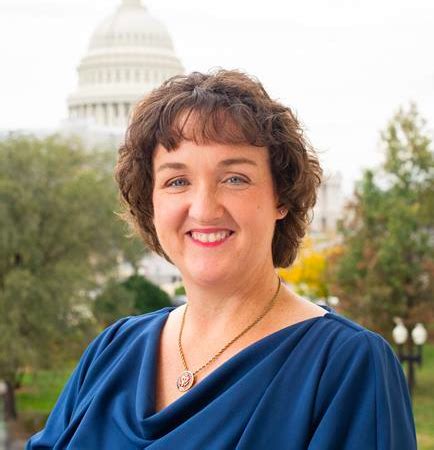
Katie Porter
Campaign or press photo
Democrat · Contender · polling average: 9.5%

Katie Porter

Porter is a three-term former U.S. representative who served in CA-45 and then CA-47, and she is an Elizabeth Warren protege and a bankruptcy law professor at UC Irvine, which is the background that produced the viral interrogations of Wall Street CEOs on the Financial Services Committee that most people know her for. She rejects all corporate PAC money, meaning money from the political action committees that corporations set up, and that pledge is one of the throughlines of how she runs.

What the badges mean
Corporate moneyFunded by corporate PACs and big donors
Criminalize povertyBacks criminal penalties tied to homelessness
Defends immigrantsWants to limit or prosecute ICE in California
Grassroots-fundedRuns on small donors, no corporate or billionaire money
Healthcare for allBacks single-payer healthcare for everyone
Police powerComes from or is backed by police and sheriff power
Pro-ICEWants more state cooperation with ICE
Raise wagesBacks raising the minimum wage
Real estate moneyFunded by real estate and developers
Self-fundedBankrolled by their own personal fortune
Tax the wealthyBacks taxing extreme wealth
Tenant sideBacks rent control and tenant protections
Raised
$9.07M
Corp. PAC
$0
IE for
~$192K
IE against (2024)
$10M

She was born Katherine Moore Porter on January 3, 1974 in Fort Dodge, Iowa, the daughter of Daniel Porter, a banker, and Liz Porter, a journalist, and she grew up on a farm near Fort Dodge. She earned a B.A. in American Studies from Yale in 1996 and a J.D. magna cum laude from Harvard Law in 2001, where she studied bankruptcy law under Elizabeth Warren, who was then a Harvard professor, and that mentorship went on to shape her whole career.

After Harvard she clerked for Judge Richard S. Arnold on the Eighth Circuit Court of Appeals from 2001 to 2002 and then worked at the litigation firm Lieff Cabraser from 2002 to 2004, and she taught at Iowa and UNLV before she joined UC Irvine School of Law in 2011 as a professor of consumer finance, bankruptcy, and commercial law, where in 2014 she published the textbook Modern Consumer Law.

In 2012, then-Attorney General Kamala Harris appointed her as California's independent monitor for the National Mortgage Settlement, where she oversaw compliance by Bank of America, JPMorgan, Wells Fargo, Citigroup, and Ally Financial under the $25 billion multistate settlement, and she served in that role until 2015. In November 2018 she won the CA-45 House seat against Republican Mimi Walters 52.1% to 47.9%, which flipped a Trump +5 district, and after the 2021 redistricting she won the new CA-47 in 2022 against Scott Baugh 51.7% to 48.3%.

Her House career was defined by the viral hearings she ran on the Financial Services Committee, and the one that went furthest was the April 10, 2019 hearing where she used her whiteboard to walk JPMorgan's Jamie Dimon through the $567-a-month shortfall a bank teller faces on JPMorgan's starting salary. She ran for Senate in 2024 and finished third with 15.3%, behind Schiff and Garvey, in the March 5 primary, and she announced her run for governor on March 11, 2025.

Porter has a documented federal legislative record, which is three terms in the U.S. House from January 2019 to January 2025, first in CA-45 and then in CA-47, and she also has an appointed role as the independent monitor of the National Mortgage Settlement from 2012 to 2015 under then-AG Harris, along with 16 years of an academic career, mainly at UC Irvine.

Her House record was consistently stronger on oversight than on legislation that actually passed, because her five lead-author bills in the 118th Congress did not advance to a floor vote, which means the viral moments came from her hearing questions rather than from laws she got signed.

YearsOfficeWhat she did with that power
2019-2025U.S. Representative, CA-45 then CA-47Financial Services, Natural Resources, Oversight and Reform Committees. Viral hearings: Jamie Dimon ($567/month, April 2019), Steven Mnuchin (PPP, June 2020), Cigna CEO on insulin (Sept. 2020). Co-sponsored Medicare for All all three sessions. 100% LCV record.
2012-2015Independent monitor, National Mortgage Settlement (CA)Appointed by then-AG Kamala Harris. Reported on bank compliance with principal reduction and direct relief to California neighbors in the $25B multistate settlement.
2011-2023Professor of Law, UC IrvineSpecialty: consumer finance, bankruptcy, commercial law. Author of Modern Consumer Law (2014). Empirical bankruptcy work with Warren and Lawless.

Her defining vote was a NO on May 31, 2023 on the Fiscal Responsibility Act, which was the Biden-McCarthy debt ceiling deal, and although the bill passed 314 to 117, Porter was among the NO votes because she objected to the work requirements that had been added to SNAP, as recorded in House Roll call 243.

These are the topics Porter covers in her campaign, and then the concrete promises she has made, because what matters is not just what a candidate talks about but what a governor could actually deliver, and for every promise there is a point where the office runs into a hard limit.

Areas she covers

Single-payer (M4A) Tenant protection Zero corporate PAC Prescription drug prices Costa-Hawkins reform Ban new oil and gas wells State antitrust DMV-ICE data firewall Smaller class sizes Universal childcare Tuition-free college Cut income tax under $100K

The five most concrete promises

Promise · Immigration
DMV-ICE data firewall
Her campaign's immigration priority is titled "Abolish ICE," and she has said she would work with federal partners toward that goal, although abolishing a federal agency is not within a governor's power. The governor-level steps she names are ending the state DMV practice of sharing driver data with federal immigration enforcement, meaning ICE, keeping California a sanctuary state, and denying state police cooperation with ICE deportation operations beyond what SB 54 already allows.
Porter's defense: she argues this is a direct and verifiable protection that a governor can in fact order by executive directive, and she points to her consumer protection record and her work as the Mortgage Settlement monitor as evidence that she knows how to use regulatory authority to defend vulnerable families.
What a governor can actually do

A governor can direct the DMV to firewall driver license data from federal immigration enforcement, can direct the Attorney General to coordinate with sanctuary jurisdictions on legal defense funds, can veto legislation that expands state cooperation with ICE, and can use the appointment power to seat leaders who will sustain the firewall.

Hard limit

The hard limit is that the federal Supremacy Clause and the database requirements of the federal REAL ID Act limit how far a state firewall can reach, because the state cannot ban federal officers from operating in California, and it cannot ban federal contractors from operating detention facilities on federal land.

Impact for our community if delivered

SELA neighbors include large mixed-status immigrant populations who interact with the DMV, schools, and clinics every single day, and a documented state firewall would reduce the routine fear of federal data exposure during those ordinary interactions, which is the concrete, governor-level part of the "Abolish ICE" platform that a voter can actually hold the next governor to.

Promise · Corporate accountability
Zero corporate PAC, state antitrust with the Cartwright Act
She is committing to reject all corporate PAC money in the gubernatorial campaign, to use the state's antitrust authority against monopoly concentration, and to hold corporations accountable for consumer fraud, price-fixing, and discriminatory practices.
Porter's defense: she signed the End Citizens United pledge, and along with Steyer she is one of the major candidates who rejects all corporate PAC money, while her academic record and her experience as the Mortgage Settlement monitor back up her consumer protection credibility.
What a governor can actually do

A governor can direct the Attorney General to use state antitrust authority, including the Cartwright Act, can appoint CPUC commissioners and Department of Insurance leadership, can sign consumer protection legislation and campaign finance disclosure legislation, and can personally reject corporate PAC money while requiring the same of staff.

Hard limit

The hard limit is that federal preemption covers much of antitrust enforcement, that Citizens United, the 2010 federal Supreme Court decision that allows unlimited corporate election spending, cannot be reversed from a single state, and that state consumer protection enforcement is limited by the Federal Arbitration Act in many consumer contract contexts.

Impact for our community if delivered

SELA neighbors face disproportionate exposure to predatory financial products, whether that is payday loans, subprime auto loans, or debt collection harassment, and state enforcement under a Porter administration would draw on her academic expertise in consumer finance. The open question is that her record is thinner on the immigrant-targeted financial industries, like remittances, immigration bond fraud, and fake notarios, that affect SELA directly.

What needs to be clarified in the promise

The "zero corporate PAC" promise has fine print, because the standard End Citizens United pledge rejects PACs established by individual corporations but does not restrict donations from trade association PACs, party committees, or individual executives, so neighbors can fairly ask whether the practical scope of the promise matches the rhetorical framing.

Promise · Housing
Reform Costa-Hawkins, expand tenant protection
She wants to increase affordable housing production, strengthen tenant protections, and address corporate consolidation in the rental market, and she wants to reform the Costa-Hawkins Rental Housing Act, which is the 1995 state law that limits local rent controls.
Porter's defense: her academic work on consumer finance includes analysis of corporate housing consolidation, and as a U.S. representative she backed the PRO Act and tenant protections, so her argument is that she already knows the regulatory mechanics.
What a governor can actually do

A governor can sign reforms to CEQA, the California Environmental Quality Act, can direct the Department of Housing and Community Development to enforce RHNA, the Regional Housing Needs Assessment, can appoint pro-supply commissioners, can use the state budget to fund affordable housing through CalHFA, and can sign just-cause eviction legislation.

Hard limit

The hard limit is that local zoning autonomy is protected under the California Constitution, that Costa-Hawkins preempts strict local rent control, and that Proposition 33 in 2024, which would have repealed Costa-Hawkins, failed, so the history of ballot failures, with Prop 10 in 2018, Prop 21 in 2020, and Prop 33 in 2024, three in six years, is the real constraint on how fast structural change can happen.

Impact for our community if delivered

SELA renter neighbors are concentrated in older multifamily housing where the pre-1995 Costa-Hawkins exemption creates price volatility, so a successful repeal alongside a state just-cause expansion would reduce displacement, but the risk is that a supply-only platform without tenant protections actually accelerates displacement in gentrifying SELA neighborhoods.

Promise · Healthcare
California Medicare-for-All, cover the undocumented
She is promising a state-level Medicare-for-All-style single-payer system, an expansion of Medi-Cal to all undocumented Californians, which Newsom already made effective in January 2024, a cap on prescription drug prices, and zero copays and zero premiums.
Porter's defense: she co-sponsored the Medicare for All Act, H.R. 1976, in all three sessions of her federal career, and at the May 5 CNN debate she called Becerra's single-payer answer "disqualifying," so her argument is that she has been consistent on this issue since 2019.
What a governor can actually do

A governor can sign single-payer enabling legislation if the Legislature passes it by two-thirds, can direct the Department of Health Care Services to expand Medi-Cal eligibility and benefit scope, can seek federal waivers under Sections 1115 and 1332, and can staff DHCS, CDPH, and Covered California with single-payer-friendly leadership.

Hard limit

The hard limit is that single-payer in California would require federal waivers under ERISA and Medicare, that AB 1400 in 2022 failed without even reaching a floor vote, and that the fiscal cost is in the range of $300 to $400 billion annually, so the 2022 failure shows that the Legislature itself, and not just federal preemption, is the binding constraint.

Impact for our community if delivered

SELA neighbors include large uninsured and underinsured populations, many of them in mixed-status families bumping into Medi-Cal eligibility cliffs, and universal coverage that includes undocumented residents would close those gaps, but it is worth being precise here, because the Newsom-era Medi-Cal expansion to the undocumented, which became fully effective in January 2024, already covers much of that gap, so the marginal improvement from single-payer is mostly in moving people off employer-sponsored insurance rather than in undocumented coverage.

Promise · Climate
Ban new oil and gas wells, plug orphan wells
She wants to ban new oil and gas extraction permits, plug orphan wells, invest in renewable energy and battery storage, and hold polluters accountable, and she carries a 100% LCV record from her time in the House.
Porter's defense: she has a 100% LCV legislative record, she co-sponsored major climate legislation in the House, and her platform includes just-transition language for displaced fossil fuel workers.
What a governor can actually do

A governor can direct the Geologic Energy Management Division, CalGEM, to deny new permits, can appoint CARB and CPUC commissioners, can use the budget for just-transition support for displaced fossil fuel workers, and can sign legislation that bans new permits or accelerates well plugging.

Hard limit

The hard limit is that existing oil and gas leases are contracts, which means the state cannot break them without compensation, and the federal Clean Air Act and Clean Water Act preempt some state-level regulation.

Impact for our community if delivered

SELA neighborhoods that sit next to oil and gas well sites, like the Inglewood Oil Field and Allenco, and next to industrial freight corridors carry a disproportionate share of fossil-fuel pollution, so denying permits and accelerating plugging would reduce the cumulative health impact, but the risk is job loss for utility workers if the just transition is not actually funded, because SELA includes both pollution-affected neighborhoods and union households that depend on utility wages, and while her platform includes just-transition language, it does not specify a funding source.

These are the four most serious attacks Porter has faced in this campaign, and for each one we have summarized her defense, laid out the facts as we investigated them, walked through what it would mean for our community, and named the places where the defense actually has merit, because an honest profile has to do all four.

Attack 1 · Staff management
October 2025 video with campaign aide
In October 2025 a video circulated showing Porter speaking sharply to a campaign aide in a recorded interaction, and her political opponents use the video to argue that her reputation for combative committee questioning also extends to how she manages her own staff.
Porter's defense: according to the campaign statement reported by the LA Times, she acknowledged the moment and said she demands a high standard of herself and her team, and notably she did not deny the video.
The facts as we investigated them

The footage was filmed in 2021, during a video call with then-Energy Secretary Jennifer Granholm, and it was obtained by Politico and began circulating on October 8, 2025, after which the campaign issued a response acknowledging it, and the SF Chronicle, the LA Times, and CalMatters all reported on the incident, while the broader pattern of staff turnover in Porter's House office during her tenure from 2019 to 2025 is documented in LegiStorm turnover data, which records an above-average turnover index for her office, and which was reported on during the 2025 campaign by outlets including the Washington Post. In May 2026 the Porter campaign released a television ad that directly references the video, closing with Porter asking a crowd of whiteboard-holding supporters to "please get out of my shot," and the ad drew a split reaction, with Porter framing it as evidence that she has taken responsibility and can laugh at herself, and critics arguing it only pulled fresh attention back to the outburst.

Community impact if the critique holds

The documented pattern is relevant to how voters evaluate executive temperament for governor, since a governor manages thousands of state employees, so the framing question for neighbors is whether that documented pattern changes their evaluation, and the dashboard's role here is to surface the documented record rather than to render a verdict on her fitness for the office.

Why the defense has merit (partial)

The video is real, the campaign acknowledged it, and acknowledging a moment that carries political cost is more honest than denying it, but the historical pattern of staff turnover in the LegiStorm data provides supporting context, because this is not a single isolated incident, so neighbors who weight executive temperament heavily in their decision can take it into account, while neighbors who weight her record on oversight, Medicare-for-All, and the environment can value that record in proportion.

Attack 2 · Senate launch timing
"Abandoned her constituents", announced Senate one week after being sworn into CA-47
Porter announced her 2024 Senate campaign on January 10, 2023, which was about one week after she was sworn in for the CA-47 term that voters had just elected her to, and critics frame this as abandoning the neighbors who had just voted for her.
Porter's defense: she framed the early entry as necessary given the size of California and the cost of running statewide, she continued her House service through January 2025, and she notes that Adam Schiff announced his own Senate campaign two weeks later, on January 26, 2023.
The facts as we investigated them

The CA-47 term began on January 3, 2023, and the Senate announcement came on January 10, 2023, after a CA-47 race that had been close, at 51.7 to 48.3, and resource-demanding for both sides, and at that point Feinstein had neither announced retirement nor died, since Feinstein died on September 29, 2023, so Porter's announcement preceded Feinstein's own retirement announcement, on February 14, 2023, by more than a month.

Community impact if the critique holds

Whether the early launch counts as abandoning anyone depends on the voter's own standard for what an elected official owes neighbors during a term they were just elected to, and the CA-47 voters who had just elected Porter are a distinct group from California voters at large, so they have a stronger claim to that question than anyone else.

Why the defense has merit (partial)

The timing is documented, and California's open primary system gives a fundraising advantage to whichever candidate launches early, which is the structural reason behind the timing, and since Schiff announced his Senate campaign two weeks later with the same logic, the pattern is not unique to Porter, although it is also true that her CA-47 race had been closer than Schiff's CA-30 seat.

Attack 3 · Crypto PAC spending against her
Fairshake (crypto) spent $10M against Porter in 2024
Fairshake, which is the federal Super PAC funded by the crypto industry, spent approximately $10 million opposing Porter in the 2024 California Senate primary, and the sheer volume of that opposition spending raises questions about her ability to compete against industry-funded attacks.
Porter's defense: she argued that the Fairshake spend was itself evidence that her consumer protection record threatened the crypto industry's deregulatory agenda, so in her telling the attack actually reverses, because being targeted by the industry reads as a consumer protection credential rather than as a defect.
The facts as we investigated them

Fairshake's FEC filer ID is C00835959, and its anti-Porter 2024 independent expenditures, meaning money spent by committees that spend for or against a candidate without coordinating with the campaign, are documented in the FEC Schedule E reports, with documented sponsors including Coinbase, Ripple Labs, and the Andreessen Horowitz crypto fund, and the total spent against Porter in 2024 was approximately $10 million.

Community impact if the critique holds

Retail crypto investors face fraud and volatility risk that consumer protection regulation would address, and state consumer protection authority would create a parallel enforcement channel, which matters in SELA because a population with less financial sophistication has been especially vulnerable to crypto fraud, whether through Bitcoin ATMs or pump-and-dump schemes that target immigrants.

The attack reverses

The Fairshake spend is documented, and industry-funded opposition to a candidate is not by itself evidence that the candidate did anything wrong, so neighbors who read the Fairshake opposition as a credential, meaning a signal of threat to the industry, and neighbors who read it as a vulnerability, meaning a signal of difficulty competing, can both find evidence for their view in the record, because Porter finished third in 2024 and whether the $10M was decisive is genuinely contestable.

Attack 4 · Third place in 2024 Senate primary
Third place in 2024 Senate primary (15.3%)
Porter finished third in the March 5, 2024 Senate primary with 15.3%, behind Schiff at 31.6% and Garvey at 31.5%, so she did not advance to the general, and her opponents use this to argue that she lacks the statewide coalition it would take to win a gubernatorial race.
Porter's defense: she pointed to the dynamics of the open primary and to a Schiff campaign strategy that boosted Garvey's name recognition in order to consolidate moderate Democratic votes against Lee and Porter, and that "boost Garvey" strategy is documented.
The facts as we investigated them

The certified primary results were Schiff at 31.6%, Garvey at 31.5%, Porter at 15.3%, and Barbara Lee at 9.8%, so Schiff and Garvey advanced to the top-two general, according to the California Secretary of State, and the 2024 Senate race had its own specific dynamics, including uncertainty around the Feinstein vacancy, AIPAC-aligned outside spending for Schiff, and Lee dividing the progressive base, while the 2026 governor race is also crowded, with Steyer, Becerra, Villaraigosa, Porter, Mahan, Hilton, and Bianco, so 15 to 20% could be enough to advance to a top-two general.

Community impact if the critique holds

Third place is real evidence about her ability to build a statewide coalition, and the interpretive question is whether the 2024 dynamics carry over to 2026, so the honest reading is that this is a data point rather than a verdict, and for SELA the practical question is a strategic one, which is whether the SELA progressive vote reaches a runoff more effectively with Porter or with another candidate.

Why the defense has merit (partial)

Third place is documented, but the structures of the 2024 race, with Schiff backed by AIPAC and Lee dividing progressives, do not replicate exactly in 2026, and the 2026 governor field is more fragmented, which changes the top-two math, and the important point is that in 2024 Porter still won around 2 million votes statewide, so that coalition does exist, even if it was not enough for top-two in that particular context.

This section lays out who funds Porter, who spends independent money for or against her, who has formally endorsed her, and how the outside organizations that apply their own scorecards have rated her, so that the money and the backing can be read together.

The money coming in

SourceAmountNotes
Self-funding$0Not self-funded. Unlike Steyer, she relies on small donors and union PACs.
Small individual donorsMajority of totalItemization requires a direct pull from CAL-ACCESS filer ID 1479597.
Corporate PAC$0Porter signed the End Citizens United pledge rejecting all corporate PAC money. Fine print: the pledge does not restrict trade association PACs or individual executive PACs.
Union PACsMaterialShared endorsements from CFL AFL-CIO and SEIU CA with Steyer and Villaraigosa.

Full itemization: CAL-ACCESS filer ID 1479597.

External Independent Expenditures (IEs)

IE = Independent Expenditure: committees that spend for or against a candidate without legally coordinating with the campaign. The most important IE history against Porter is from the 2024 Senate race.

CommitteeDirectionAmountWho funds
Fairshake (crypto PAC, 2024)Against (Senate)~$10MCoinbase, Ripple Labs, Andreessen Horowitz crypto fund
2026 IE forFor~$192KSpread thin across 12 small committees, with no major super PAC backing her.
2026 IE againstAgainst$0No committee has reported independent spending against Porter in the 2026 race.

2026 independent-expenditure totals from cagovtracker.com, which reads the CAL-ACCESS filings, synced May 20, 2026.

Formal endorsements

  • Unions: California Labor Federation AFL-CIO (joint endorsement with Steyer and Villaraigosa), SEIU California State Council (joint endorsement with Steyer).
  • Movement organizations: EMILY's List, Planned Parenthood Affiliates of California, Equality California.
  • Environmental: California Environmental Voters, in a dual endorsement with Steyer that the group made so a pro-climate candidate would be sure to advance under the top-two primary.
  • Editorial boards: in May 2026 Porter was endorsed by the San Francisco Chronicle, the Bay Area Reporter, and the McClatchy California editorial board, which speaks for the Fresno Bee, Merced Sun-Star, Modesto Bee, Sacramento Bee, and San Luis Obispo Tribune.
  • Elected officials and individuals: Senator Elizabeth Warren, who taught Porter bankruptcy law at Harvard, along with U.S. Representatives Dave Min, Derek Tran, and Robert Garcia, per the campaign endorsements page.
  • Doesn't have: California Nurses Association (endorsed Steyer, a notable signal given Porter's M4A record), Our Revolution (endorsed Steyer), Courage California (endorsed Steyer as their only choice), Sierra Club California (also endorsed Steyer).

External scorecard ratings

OrganizationTypeRatingLink
League of Conservation Voters (LCV)House environmental lifetime record100%view
GovTrack (House)Voting recordCompiledview
Vote Smart (House)Voting recordCompiledview
CalMatters Voter GuideProfileProfiled, no scoreview
BallotpediaProfileProfiled, no scoreview
End Citizens UnitedAnti-corporate PAC pledgeSignedview
Sierra Club CaliforniaEnvironmental endorsementNo endorsement (endorsed Steyer)view
California Environmental VotersEnvironmental endorsementEndorsed (dual endorsement with Steyer)view
Courage California / Progressive Voters GuideProgressive ratingNo endorsement (chose Steyer)view
LAist Voter Game PlanNewsroom voter guideProfiledview

Full list of the 49+ scorecards and voter guides we track on the scorecards page.

This guide is free. If it helps you, chip in to keep it that way.