DRAFT · Community review in progress. See something that looks wrong? Tell us.
Español English
Community Dashboard
Primary June 2, 2026
Updated May 20, 2026
Member Portal
This guide is free. If it helps you, help us keep it going.Support our work
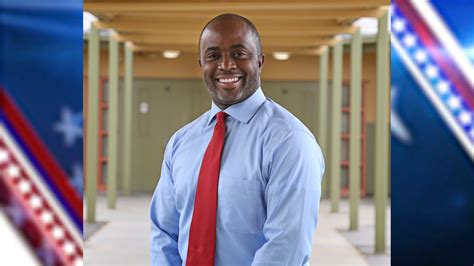
Tony Thurmond
Campaign or press photo
Democrat · Long shot · polling average: 1.4%

Tony Thurmond

Tony Thurmond has been California Superintendent of Public Instruction since 2019, and before that he was an assemblyman, a Richmond city councilmember, and a social worker, which is a long run inside government for someone who was raised by cousins in Philadelphia after his Panamanian immigrant mother died and left him orphaned at age 6. His 2026 platform is built around a one-time billionaire tax, a "Literacy Moonshot" for third-grade reading, 2 million units on surplus school land, and dismantling ICE (Immigration and Customs Enforcement) at the state level.

What the badges mean
Corporate moneyFunded by corporate PACs and big donors
Criminalize povertyBacks criminal penalties tied to homelessness
Defends immigrantsWants to limit or prosecute ICE in California
Grassroots-fundedRuns on small donors, no corporate or billionaire money
Healthcare for allBacks single-payer healthcare for everyone
Police powerComes from or is backed by police and sheriff power
Pro-ICEWants more state cooperation with ICE
Raise wagesBacks raising the minimum wage
Real estate moneyFunded by real estate and developers
Self-fundedBankrolled by their own personal fortune
Tax the wealthyBacks taxing extreme wealth
Tenant sideBacks rent control and tenant protections
Raised
$375K
Cash
$1.03M
IE For
$12K
IE Against
$0

He was born August 21, 1968 in Monterey, California, to Cecelia, a Panamanian immigrant and a teacher, while his father served in Vietnam and did not return to the family. When Tony was 6 his mother died, and he and his younger brother were sent from California to Philadelphia to be raised by cousins they did not know.

He grew up in a poor and racially segregated neighborhood of Philadelphia, where the family depended on public assistance and free school lunch, and that experience as a child in informal extended-family care is the base of nearly all his public speaking over the past 20 years, according to the profiles by Imprint News (2015) and Temple Now (2024).

He studied Psychology at Temple University, earning a B.A. in 1993, where he was also student body president, and then he completed two master's degrees at Bryn Mawr, one in Social Service (1995) and one in Law and Social Policy (1996). From 1995 to 2005 he worked as a social worker in Philadelphia and the Bay Area, carrying cases that involved foster youth, juvenile justice and developmental disabilities.

His political career began in 2005 when he was appointed to fill a vacancy on the Richmond City Council, and he was re-elected in 2006 to a two-year term, after which he served on the West Contra Costa Unified School District board from 2008 to 2012 and was elected to the California State Assembly (District 15) in 2014, where he spent four years in Sacramento focused on school mental health, after-school programs, and foster-youth education.

In November 2018 he won the election for California Superintendent of Public Instruction against Marshall Tuck by roughly two points, in what became the most expensive race for that office in state history, about $49.8M all told, with charter-school-backed outside committees spending more than $28M to support Tuck and teacher-union and labor committees spending more than $12M to support Thurmond. He was re-elected in 2022 by 26 points, and he announced his gubernatorial bid in September 2023, more than two years before the primary.

Thurmond has worked at nearly every level of California government, since he has been a frontline social worker, a city councilmember, a school board member, a state assemblymember and an elected statewide officer, and all of those roles have revolved around education and child welfare, which is a wider span of government experience than most of the Democratic field carries.

The open questions are about large-scale management, because there is a real record to weigh on how he handled the roughly 2,500 people of the Department of Education, on hiring decisions that have been documented as problematic, and on how hard he pushed during the pandemic, all of which are laid out in Attacks 1, 2 and 3.

YearsRoleWhat he did with that power
1995-2005Social worker, Philadelphia and Bay AreaDirect work with foster youth, juvenile justice and developmental disabilities. The experience he cites as the foundation of his public policy.
2005-2008Richmond city councilmemberAppointed in 2005, elected in 2006. Liaison to the Youth Commission, the Workforce Investment Board, and the local school district.
2008-2012School board, West Contra Costa Unified~30,000-student district. Authority over budget, superintendent selection, contracts and curriculum policy.
2014-2018Assemblymember, District 15AB 1014, his signature bill: K-3 chronic absenteeism prevention, introduced 2015 and signed by Brown in 2016. Focus: school mental health, after-school programs, foster education.
2019-presentCA Superintendent of Public InstructionNonpartisan statewide elected office. Heads the Department of Education. Does NOT control local school-reopening decisions nor local-level charter authorization. His authority is advisory, not binding, on many matters.

Note on the Superintendent's office: the role looks more powerful than it is. School-closure decisions during COVID were made by local health officials and counties, not the Superintendent. The Prop 98 funding formula is set by the legislature. Charters are authorized by local boards and counties. That affects how to evaluate both achievements and criticisms.

These are the themes Thurmond covers in his campaign, followed by the concrete promises, and for each promise there is a fuller breakdown of what a governor can actually do and where the hard limit lies.

Areas he covers

One-time billionaire tax Literacy Moonshot 2M units on school land Dismantle ICE Single-payer (M4A) Defend Medi-Cal Universal child care Raise Prop 98 Tax credits for working families $10B affordable-housing bond

The five most concrete promises

Promise · Taxes and wealth
One-time billionaire tax to defend Medi-Cal
This is a one-time tax on the assets of Californians with very large fortunes, and the revenue would backfill federal cuts to Medi-Cal while also funding tax credits for working- and middle-class families, which is why he treats it as the centerpiece of his platform.
Thurmond's defense: he is the only candidate in the 2026 field proposing this specific structure. He contrasts it directly with Tom Steyer, the self-funding billionaire: "California works for millionaires and billionaires, but for the rest of us we need real change."
What a governor can actually do

A governor could sign enabling legislation if the Legislature passes it, and could back a qualifying ballot initiative, and could use the budget process to redirect revenue, and could use the appointment power to staff the Franchise Tax Board.

Hard limit

The California Constitution requires a two-thirds Legislature for changes to income tax rates, and a one-time wealth tax faces constitutional questions under the federal Due Process Clause if it is applied to non-residents or out-of-state assets. And a one-time tax is exactly that, a single event, so ongoing fiscal needs are not solved by a single revenue event.

Impact for our community if delivered

Revenue redirected to backfilling Medi-Cal and to working-family credits would materially reach SELA households, and for mixed-status families the Medi-Cal backfill protects coverage that the Trump administration has threatened to cut, while the working-family tax credit lands straight in the tax refund.

Promise · Housing
2 million units on surplus school land by 2030
He proposes building 2 million housing units by 2030 using surplus school-district land in every California county, along with a $10 billion affordable-housing bond on the ballot and down-payment assistance for first-time buyers.
Thurmond's defense: he uses the authority he already has as Superintendent to know which districts have underused land. The idea of "school land for housing" is operational, not just rhetorical.
What a governor can actually do

A governor could sign enabling legislation for the bond and put it before voters, could direct the Department of General Services and the State Allocation Board on surplus school-land disposition, could direct HCD on pre-development funding, and could sign down-payment assistance legislation.

Hard limit

Surplus school land is the property of local districts and not of the state, so redirecting it for housing requires either legislation that overrides the Naylor Act and related statutes, or voluntary district cooperation, and the $10B bond requires voter approval. And 2 million units by 2030, which is only four years out, exceeds California's historical production rates.

Impact for our community if delivered

SELA is predominantly renter, so what is most needed here is tenant protection, eviction defense, and affordable supply, and the bond would finance affordable supply, part of which would reach SELA. The school-land mechanism depends on which districts participate, which means districts like Montebello, Bell Gardens and the LAUSD east-side would need to cooperate, and the honest risk is that the 2-million target is a campaign promise at a scale no California governor has delivered.

Promise · Immigration
"Dismantle ICE" at the state level
He would strengthen state sanctuary protections, deny ICE (Immigration and Customs Enforcement) access to state facilities, and build a firewall between DMV, education and health data on one side and federal ICE on the other.
Thurmond's defense: the "dismantle ICE" language is a rhetorical frame. The concrete action is to expand SB 54 (the state sanctuary law) and block state facilities. He acknowledges that federal preemption is real.
What a governor can actually do

A governor could direct state law-enforcement not to cooperate with ICE under SB 54, could direct DMV, CalHHS and the Department of Education to firewall personal data, could deny ICE access to state facilities by executive order, and could direct the Attorney General to pursue state-law theories against federal agents acting outside the scope of their federal authority.

Hard limit

The federal Supremacy Clause and federal officer immunity both limit state action against federal agents who are acting within their federal authority, and the federal government can enforce immigration law directly in California regardless of state cooperation, which means a California governor cannot literally "dismantle" ICE, because it is a federal agency.

Impact for our community if delivered

Families who are currently afraid of routine DMV visits, school enrollments and clinic appointments would have a clearer state firewall, and for SELA that means protection for mutual-aid networks, safe routes to school, and community clinic appointments without fear of data crossover, although the honest framing question is whether "dismantle ICE" promises more than a governor can actually deliver.

Promise · Education
"Literacy Moonshot" for third-grade reading
This is his signature initiative as Superintendent, and its goal is that every California student reads at third-grade level, which he has carried into the gubernatorial campaign as the centerpiece of his education agenda, alongside universal child care and raising the Prop 98 floor.
Thurmond's defense: this is the area where his experience as Superintendent is most directly relevant, because he already has relationships with CTA, CFT and others, and he knows the mechanics of the Local Control Funding Formula and Prop 98.
What a governor can actually do

A governor could sign amendments to LCFF (Local Control Funding Formula), could appoint the State Board of Education, could direct CDE staff and grant programs, could sign tuition-relief and teacher-pipeline legislation, and could use the budget process to push Prop 98 funding to the maximum.

Hard limit

The Proposition 98 minimum funding formula is written into the state constitution, so raising the floor requires either a ballot initiative or budget maneuvering within the existing formula, and charters are authorized by local boards rather than by the state.

Impact for our community if delivered

SELA school districts, including Montebello, Bell Gardens, South Gate and the LAUSD east-side schools, are chronically underfunded relative to per-student need, so pushing Prop 98 would help, and universal child care would directly relieve costs on SELA working families, since child care is one of the biggest barriers to mothers' labor-force participation. The third-grade reading goal is the area where Thurmond's experience is most usable.

Promise · Health
Defend Medi-Cal and single-payer-style reforms
He would defend Medi-Cal against federal cuts using the billionaire-tax revenue, and he supports single-payer-style reforms, although the Medi-Cal defense is the most operational piece while the single-payer framing is more aspirational.
Thurmond's defense: the Medi-Cal backfill is the most direct and fastest-to-apply component, because it does not require restructuring the entire health system, it only requires redirecting revenue from the new tax to plug the federal hole.
What a governor can actually do

A governor could sign single-payer enabling legislation if the Legislature passes it, could direct the Department of Health Care Services to expand Medi-Cal, and could seek federal waivers under sections 1115 and 1332.

Hard limit

California single-payer requires either a constitutional amendment, a two-thirds Legislature, or federal waivers under ERISA and Medicare, and AB 1400 in 2022 died without a floor vote, while the projected cost runs $300B-$400B annually.

Impact for our community if delivered

SELA includes large uninsured and underinsured populations, many of them mixed-status families that fall into the Medi-Cal eligibility cliffs, and the Medi-Cal backfill is the most immediately actionable piece of his health commitment, because it is not zero copays but rather coverage held against the federal attack, which makes it defense more than advance.

These are the five most serious attacks Thurmond has faced in this campaign and during his Superintendent tenure, with the candidate's defense summarized, and each one opens to the facts as we investigated them, the community impact, and where the defense has merit.

Attack 1 · Toxic CDE workplace
Politico reported staff intimidation at the Department of Education
In September 2021, Politico reported that nearly two dozen senior officials at the Department of Education had resigned during Thurmond's tenure, and nine former officials told the outlet that Thurmond humiliated and intimidated staff.
Thurmond's defense: according to GV Wire's October 2021 coverage, he declined to engage with the specific accusations and pivoted to his policy record at the Department, and he has stressed that the allegations are about management style and not about sexual harassment.
The facts as we investigated them

Nearly two dozen senior officials left CDE during Thurmond's tenure, and nine former officials spoke on the record with Politico about humiliation and intimidation, in an agency that has roughly 2,500 employees, and the departures themselves are documented in the original reporting from Politico, via KVCR.

Community impact if the critique holds

A governor has to manage roughly 250,000 state employees and a budget above $300 billion, so if the management pattern documented at CDE were to repeat at the scale of the state, the consequences would be material, since high turnover and the loss of experienced staff lead to morale problems at the agencies that deliver direct service, like DMV, EDD and CalWORKs, and for SELA the quality of state service affects working families every day.

Why the defense has merit (partial)

The allegations are about style rather than illegal harassment, and some of the officials who left did so for political or career reasons unrelated to bullying, while the "two dozen" figure sounds high but has to be read relative to the agency's size. Even so, voters who weigh executive management closely can reasonably read this as a serious record.

Attack 2 · Daniel Lee hire
Thurmond associate hired into an unposted position while living in Philadelphia
In July 2020, Daniel Lee, a longtime Thurmond associate and Philadelphia resident, was hired as "equity superintendent" at a salary of up to $179,832, even though the position had not been posted, and the initial funding came from a private grant before it was converted to taxpayer funds.
Thurmond's defense: the Department defended the original hire, and after Lee resigned in December 2021 it announced reforms to its hiring processes.
The facts as we investigated them

Lee was hired in July 2020 at up to $179,832 for a position that was never posted, and the initial funding was a $700,000 Hewlett Foundation grant routed through the Californians Dedicated to Education Foundation, which was later converted to public funds. Lee was a Philadelphia resident running a Philadelphia business during the appointment, in apparent violation of residency requirements for state employees, and he resigned in December 2021, with the investigation documented by California Globe.

Community impact if the critique holds

Three procedural questions tangle together here, because routing private foundation funds through a related nonprofit to fund a state position is the procedural question, hiring an associate without posting the position is the patronage question, and hiring an out-of-state resident for a state job is the compliance question, and if that pattern were to repeat at the scale of governor it would be material for an administration that makes thousands of appointments.

Why the defense has merit (partial)

Lee resigned, the Department announced reforms, there was no prosecution or formal finding of misconduct, and the Hewlett grant was an institutional decision rather than a personal one. Even so, all three elements are documented, and voters can decide for themselves whether they reflect mismanagement or a deliberate workaround.

Attack 3 · Ethnic Studies curriculum
First draft rejected for antisemitism; AB 2918 died under union pressure
The first draft of the Ethnic Studies Model Curriculum produced under Thurmond's CDE was rejected by Jewish legislators for anti-Israel and antisemitic content, and the follow-up bill, AB 2918 in 2024, which Thurmond co-sponsored, was withdrawn under CTA opposition.
Thurmond's defense: in a 2024 J Weekly profile he emphasized his ties to the Jewish community and his continued commitment to addressing antisemitism in schools, and he points out that the first draft was revised under his oversight, which he reads as responsiveness to the critique.
The facts as we investigated them

The first draft was rejected by the Jewish Public Affairs Committee, and the curriculum was revised before AB 101 (2021) made Ethnic Studies a high-school graduation requirement. AB 2918 was co-sponsored with the Legislative Jewish Caucus to require district review committees, but the bill was withdrawn on August 15, 2024 under CTA and ethnic-studies faculty opposition.

Community impact if the critique holds

For Los Angeles Jewish families the question is whether Thurmond will protect their cultural safety, while for Palestinian, Arab and Muslim families the question is whether the revision cut too much Palestine content, and for ethnic-studies teachers the question is whether the district committee designation has a chilling effect, and all three questions are tangled together.

Why the defense has merit (partial)

The first draft was rejected and the revision did happen, AB 2918 was his co-sponsorship rather than his opposition, and the withdrawal came under union pressure rather than by his choice, so voters can read his record either as responsive, since he revised the draft and pushed AB 2918, or as caught between competing constituents, since the bill still failed under union pressure.

Attack 4 · Left off the debate stage
Left off both the May 5 and May 14 televised debate stages
Thurmond was kept off both of the closing televised debate stages, the May 5 CNN debate and the May 14 CBS News California and San Francisco Examiner debate, because each broadcaster set a polling and qualification bar that the rest of the field cleared and he did not.
Thurmond's defense: the campaign has not treated the exclusions as a reason to step back, with Thurmond saying he is "in it to the end, and I'm running to win", and it consistently frames his low fundraising as a feature rather than a flaw, meaning a candidate who is not for sale to billionaires.
The facts as we investigated them

For the May 5 CNN debate at East Los Angeles College, CNN required candidates to have raised at least $1 million and to have polled at 3% or higher in qualifying polls, and Thurmond met neither bar. Nine days later he was again left off the stage when CBS News California and the San Francisco Examiner hosted the final debate of the primary on May 14, a debate they limited to candidates who had qualified for the ballot and cleared a polling threshold, and the seven who made the stage were Becerra, Bianco, Hilton, Mahan, Porter, Steyer and Villaraigosa. He did take part in the earlier and broader April 28 debate, and the two exclusions are documented by CNN, CBS News and CalMatters.

Community impact if the critique holds

Debate exposure is a campaign multiplier at limited cost, so missing both debate stages makes it harder for his platform, meaning the one-time billionaire tax, the Literacy Moonshot, and the 2 million units, to reach casual voters, and for a Latino community watching debates on Spanish-language TV or catching clips, his absence limits how far his message can reach the SELA electorate.

Why the defense has merit (partial)

Both broadcasters applied published thresholds rather than singling Thurmond out, so this is not an arbitrary decision against him personally, although the interpretive question that remains is whether voters read the two exclusions as a media-gatekeeper failure or as a reasonable bar for a high-profile event.

Attack 5 · COVID closures
As Superintendent during COVID, didn't push hard for reopening
California public schools stayed in distance learning from March 2020 through fall 2021, longer than many other states, and Thurmond was criticized for not pushing reopening aggressively.
Thurmond's defense: he has repeatedly stated that closure decisions are made by local districts and county health officials rather than by the Superintendent, and he points out that he supported state funding plans to help schools return to in-person learning.
The facts as we investigated them

Public schools were in distance learning from March 2020 through fall 2021, and Thurmond's authority over closure and reopening decisions is advisory rather than binding, because local districts and county health officials control the specifics, as covered by CalMatters.

Community impact if the critique holds

SELA was among the communities hardest hit by learning loss during the prolonged closures, because working families without laptops, without reliable Wi-Fi, and with parents in essential jobs could not supervise remote learning, and if Thurmond had pushed harder for an earlier and safe reopening, SELA families might have absorbed less of that loss.

Why the defense has merit (partial)

The structural limit of the Superintendent's authority is real, and the bully-pulpit critique is fair but turns on a counterfactual that cannot be settled, since we cannot know whether more public voice would have changed local decisions. Voters who weigh aggressive executive leadership may read this as a signal of his style, while voters who weigh institutional deference may read it as appropriate.

This section lays out who funds Thurmond, who is spending independent money for or against him, who has formally endorsed him, and how he is rated by outside organizations, and the headline is that Thurmond is the least funded Democratic candidate in the main field, with roughly $375K raised this cycle compared with about $197 million for Steyer.

Money coming in

ItemAmountNotes
Total raised this cycle~$375KLowest in the main Democratic field
From individual donors~$261K69% of the total, and only about 6% of all his money came from small donors giving under $200, across 426 such gifts
From committees and PACs~$113K30% of the total, much of it from labor union PACs, with no party money
Cash on hand (April 18, 2026)$1.03MLarger than what he has raised this cycle, and his main resource for the final primary stretch
Most recent reporting period~$62KThe weakest fundraising stretch in the Democratic field
Spent to date~$679KA lean operation by necessity

Outside independent expenditures (IE)

IE = Independent Expenditure: committees that spend for or against without legally coordinating with the campaign. About $12K in independent spending supporting Thurmond is documented, a mix of small voter-guide and outreach activity from ACLU California Action Votes and a handful of individual independent expenditures, and no independent spending against him is documented at all. That near-absence reflects his standing in the race, since he is not polling high enough to draw organized opposition and has not pulled labor-PAC infrastructure on the scale of Steyer or Becerra.

Historical context: his 2018 Superintendent race was the most expensive contest for that office in state history, about $49.8M all told, and more than 80% of the money came from independent committees, with over $28M backing Marshall Tuck from charter-school donors and over $12M backing Thurmond from teacher unions and labor. That is the relevant precedent for what could emerge if the 2026 race tightens.

Formal endorsements

Thurmond's endorsements lean heavily on educators, social workers and local school-board members rather than on the big statewide unions, several of which went to other candidates. The list below draws on his campaign's published endorsements and on each organization's own announcements.

  • Labor and advocacy organizations: the California Faculty Association, in a dual endorsement shared with Xavier Becerra, the National Association of Social Workers California chapter, two International Brotherhood of Electrical Workers locals (302 and 952), the International Union of Elevator Constructors Local 8, Black Women Organized for Political Action, and the Harvey Milk LGBTQ Democratic Club.
  • Elected officials: Congresswoman Laura Friedman, former state Superintendent Jack O'Connell, and a long roster of state legislators, county supervisors, city councilmembers and school-board trustees, with the school-board trustees forming the single largest bloc of his support.
  • The two big teacher unions went elsewhere: the California Teachers Association recommended Tom Steyer in April 2026, and the California Federation of Teachers also endorsed Steyer, so neither statewide teacher union backed the candidate who currently runs the state's school system.
  • The California Federation of Labor did not endorse Thurmond either, landing instead on a set of dual endorsements that covered Porter, Steyer, Swalwell and Villaraigosa.
  • Does not have: the California Medical Association, which endorsed Becerra, the California Nurses Association, which endorsed Steyer, and SEIU California, which endorsed Steyer on May 6, 2026.

Outside scorecard ratings

OrganizationTypeRatingLink
California Faculty Association2026 gubernatorial endorsementDual endorsement with Becerrasee
California Teachers Association2026 gubernatorial endorsementEndorsed Tom Steyer, not Thurmondsee
California Federation of Teachers2026 gubernatorial endorsementEndorsed Tom Steyer, not Thurmondsee
California Federation of Labor AFL-CIO2026 gubernatorial endorsementDid not endorse Thurmondsee
BallotpediaProfileListedsee
CalMatters Voter GuideProfileListedsee

Why money matters here

Raising about $375K this cycle in a multi-candidate California gubernatorial primary is a real constraint, especially when Steyer's campaign reports roughly $197 million raised, and Thurmond's most recent $62K reporting period is the weakest in the Democratic field. He does hold about $1.03M in cash, more than he has raised this cycle, but even that is small next to the rest of the field, and it limits his ability to run statewide media, fund field operations, and compete for late-deciding voters in the June primary, although his campaign frames the low fundraising as a feature, meaning a candidate not for sale to billionaires, and voters can weigh both readings.

Full list of scorecards and voter guides tracked on the scorecards page.
This guide is free. If it helps you, chip in to keep it that way.