DRAFT · Community review in progress. See something that looks wrong? Tell us.
Español English
Community Dashboard
Primary June 2, 2026
Updated May 20, 2026
Member Portal
This guide is free. If it helps you, help us keep it going.Support our work
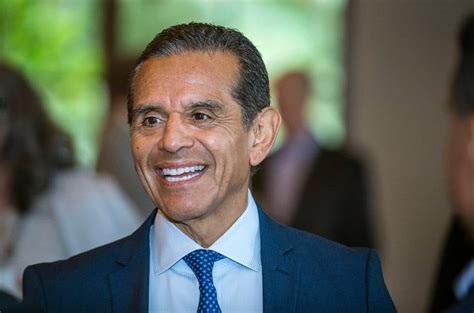
Antonio Villaraigosa
Campaign or press photo
Democrat · Contender · polling average: 3.0%

Antonio Villaraigosa

Villaraigosa is a former two-term Mayor of LA who served from 2005 to 2013, and a former Speaker of the California Assembly from 1998 to 2000, and he is a son of Boyle Heights, which is a story many of our families know in their bones. This is his third statewide try, coming after he lost the 2018 gubernatorial primary with 13.3%, and he is backed by the Building Trades, by real estate, and by police, and he accepts corporate PAC money. What he promises is a $25 billion housing bond, an "all of the above" energy policy that keeps oil and gas in the mix, and "holding the line" on Prop 13 for both residential and commercial property.

What the badges mean
Corporate moneyFunded by corporate PACs and big donors
Criminalize povertyBacks criminal penalties tied to homelessness
Defends immigrantsWants to limit or prosecute ICE in California
Grassroots-fundedRuns on small donors, no corporate or billionaire money
Healthcare for allBacks single-payer healthcare for everyone
Police powerComes from or is backed by police and sheriff power
Pro-ICEWants more state cooperation with ICE
Raise wagesBacks raising the minimum wage
Real estate moneyFunded by real estate and developers
Self-fundedBankrolled by their own personal fortune
Tax the wealthyBacks taxing extreme wealth
Tenant sideBacks rent control and tenant protections
Raised
~$6.3M
Small donors
1%
IE for
$1.22M
IE against
$0

He was born on January 23, 1953 in Los Angeles as Antonio Ramon Villar Jr., the son of Antonio Villar Sr., a Mexican immigrant, and Natalia Delgado, a typist, and when Antonio was five his father left the family, so his mother raised four kids on her own as a single mom in Boyle Heights and unincorporated East LA.

In the late '60s he was briefly expelled from Cathedral High School after a fight, but he returned to school at Theodore Roosevelt High School in East LA with the encouragement of a teacher named Herman Katz, and he graduated, and in 1977 he earned a B.A. in history from UCLA after going through East Los Angeles College first, and while he was at UCLA he was president of MEChA and organized student protests on Vietnam, on ethnic studies, and on farmworker rights.

In the early '80s he attended the People's College of Law, an unaccredited law school in LA, and he took the California bar exam four times but never passed it, so he was never admitted to the bar, and through the '80s he worked as a field representative and organizer for United Teachers Los Angeles, the LAUSD teachers' union. In 1987 he married Corina Raigosa, and the two of them combined their surnames into "Villaraigosa," and they had four kids, and in 1993 he served as president of the ACLU of Southern California.

In 1994 he was elected to the California State Assembly for District 45 in East LA, on the same November ballot that carried Proposition 187, which he opposed as a candidate, and from 1998 to 2000 he served as Speaker of the Assembly, the first Latino to hold that post, until he was term limited out in 2000. In 2001 he lost the runoff for LA mayor against James Hahn, in 2003 he was elected to LA City Council D-14, defeating Council Member Nick Pacheco, and in 2005 he won the rematch against Hahn to become the first Latino mayor of LA since 1872, serving two terms that ended in 2013. In 2018 he finished third in the gubernatorial primary with 13.3%, while Newsom won with 33.7%, and in 2025 he divorced Patricia Govea, with a $500K lump-sum payment instead of alimony, and on March 5, 2026 he filed papers for governor, and on April 14, 2026 he signed a one-term pledge.

Villaraigosa has 16 years of elected experience, which breaks down into six years in the Assembly, the last two of them as Speaker, two years on LA City Council, and eight years as Mayor of LA, and on top of that he has a previous failed statewide run in 2018.

The documented record has three patterns running through it. The first is that he votes with the Building Trades reliably but breaks with the teachers' union, both UTLA and CTA, on K-12 governance. The second is on immigration, where his opposition to Prop 187 in 1994 is real and cost him politically, although as mayor he defended LAPD's Special Order 40 without expanding sanctuary protections beyond it. The third is that his signature ambitions have a pattern of being struck down or trimmed, since AB 1381, the LAUSD takeover, was declared unconstitutional and the "30/10 Initiative" was renegotiated, and the one-term pledge fits that same pattern of a bold opening that may not survive the legislative process.

YearsRoleWhat he did with that power
2005-2013Mayor of Los AngelesSponsored AB 1381 to take over LAUSD, declared unconstitutional in Dec. 2006. Pivoted to the Mayor's Partnership for LA Schools (22 schools). Lead backer of Measure R (2008, transit sales tax). Launched Green LA (2007), LADWP coal exit. Defended Special Order 40 against ICE but did not expand it. Mirthala Salinas scandal (2007).
2003-2005LA City Council D-14One of 15 votes. Beat Nick Pacheco. Resigned mid-term to become mayor.
1994-2000CA Assembly D-45Speaker of the Assembly 1998-2000. First Latino Speaker of the California Assembly. Publicly opposed Prop 187 in 1994.
1993President, ACLU SoCalBoard leadership for a year before the Assembly.
1980sOrganizer, UTLALAUSD teachers' union. Early labor coalition base. His later Partnership generated a rupture with UTLA.

These are the topics Villaraigosa covers in his campaign, and then the concrete promises he has made, because what matters is not just what a candidate talks about but what a governor could actually deliver, and for every promise there is a point where the office runs into a hard limit.

Areas he covers

$25B housing bond "All of the above" energy Defend Prop 13 (residential and commercial) CEQA reform ICE, agent ID only Anti-single-payer Pro-police (PORAC endorsement) One-term pledge Gas price plan (refinery retention)

The five most concrete promises

Promise · Housing
$25 billion bond for middle-class homeownership
He calls it the "Middle-Class Homeownership and Family Home Construction Act of 2026," and it would issue up to $25B in state revenue bonds to finance second mortgages for buyers of new single-family homes in the $600K to $900K range, with a target of 100,000 to 150,000 new homes, alongside CEQA reform.
Villaraigosa's defense: he argues that the plan funds new home construction at scale, that the Building Trades back it, that homeownership has historically been the path to generational wealth, and that CEQA reform would speed up permits.
What a governor can actually do

A governor can sign bond authorization legislation if the Legislature passes it, can refer the bond to the ballot for voter approval, can direct the Department of Housing and Community Development, the HCD, on implementation, and can sign CEQA reform.

Hard limit

The hard limit is that revenue bonds at this scale typically require voter approval, that CEQA reform requires legislation, and that single-family home construction depends on local zoning, which sits under the authority of local jurisdictions.

Impact for our community if delivered

"Middle-class homeownership" in the $600K to $900K range covers homes that a buyer needs roughly $150K to $225K in income to afford, which is well above SELA's median household income, and the plan finances second mortgages, meaning the gap between the primary mortgage the buyer qualifies for and the actual purchase price, so the target market is really mid-to-upper-income buyers in new suburban developments rather than the typical renter family in SELA. What it does help SELA with is construction jobs for Iron Workers, Operating Engineers, and Pipe Trades workers, but what it does not address is a Costa-Hawkins repeal, a just-cause eviction expansion, or anti-displacement protection during construction.

Promise · Energy and climate
"All of the above": oil, gas, renewables, and small nuclear
He is running on an "all of the above" energy approach, which means renewables like wind, solar, and geothermal together with oil, gas, and small nuclear, and he wants to accelerate transmission line approvals and reform the regulations that he says "drive refineries out of California."
Villaraigosa's defense: he argues that keeping local refinery capacity keeps gasoline prices close to national averages and keeps union jobs, and that accelerating transmission lines is necessary in order to scale renewables. At the May 14 CBS debate he pressed the same case, saying California needs "an all-of-the-above energy policy" because neither the climate deniers nor a renewables-only plan will work, and he pointed to the roughly 167,000 EV charging stations the state has built over the past decade while arguing it will need close to two million more and does not yet have the grid to carry them.
What a governor can actually do

A governor can direct the permit policy of CalGEM, the Geologic Energy Management Division, can appoint CARB and CPUC commissioners, can sign or veto transmission siting reform, and can use the budget for just-transition support.

Hard limit

The hard limit is that existing oil and gas leases are contracts, that the federal Clean Air Act sets the baseline emissions standards, and that some California regulations require federal waivers.

Impact for our community if delivered

"All of the above" means continuing to issue permits for new oil and gas wells while also expanding renewables, so the renewable piece is what gets added on while the fossil piece is what the framing avoids naming. The direct harm is that SELA neighborhoods like Boyle Heights, East LA, Wilmington, and South Gate carry the cumulative pollution from oil and gas operations, and continuing the permits keeps that harm in place. The indirect help is that faster transmission line construction lowers electricity costs over time and supports renewable deployment. And the trap is that reducing refinery regulations means more pollution in fence-line communities like Wilmington, Carson, and Richmond in exchange for lower gasoline prices at the highway.

Promise · Taxes
"Hold the line" on Prop 13, residential and commercial
This is a commitment to homeowners and to developers that he will not pursue reform of Proposition 13, and it matters because commercial Prop 13 reform, the split-roll, is the largest available source of state revenue for schools and local governments.
Villaraigosa's defense: he argues that low-income homeowners with low assessed values benefit from the Prop 13 status quo, that California already has high taxes, and that reform brings capital flight risks.
What a governor can actually do

A governor can veto Prop 13 reform legislation, can sign a "no new taxes" pledge, and can use the budget process to fund alternatives.

Hard limit

The hard limit is that Prop 13 is in the Constitution, so the governor cannot raise property taxes unilaterally no matter what, which means the pledge mostly closes off the governor's affirmative role in backing reform rather than closing off some unilateral imposition of reform that was never possible in the first place.

Impact for our community if delivered

SELA renters do not benefit from Prop 13 protection, because rental property owners pass tax increases through as rent, while SELA homeowners with low assessed values do benefit from the Prop 13 status quo, and at the same time SELA schools are chronically underfunded and would benefit from commercial split-roll revenues, which are estimated at roughly $11.5B a year, so the plan protects residential Prop 13, which has working-class beneficiaries, at the cost of closing off commercial Prop 13 reform, which would fund SELA schools.

Promise · ICE and immigration
Ban masked federal agents, require 40 hours of training
He says he wants to "hold federal immigration enforcement accountable," which means banning masked federal agents in California and requiring clear identification of federal agents in the state, and on day one he would issue an executive order requiring 40 hours of California peace officer training for federal agents operating in the state, while continuing to transfer "violent offenders" to federal custody.
Villaraigosa's defense: he argues that the plan is real and specific, with agent identification, training, and rules on state property, and to his credit he acknowledges that it is the federal government, not California, that controls ICE.
What a governor can actually do

A governor can sign executive orders establishing rules for federal agent access to state property, can direct the state Attorney General to sue when federal agents violate state law through assault, false detention, or other civil violations, can withhold state police assistance under the existing SB 54, can use state regulatory authority to require identification on state property, and can maintain the "violent offender" transfer protocol, which is already existing practice.

Hard limit

The hard limit is that the Federal Supremacy Clause and the federal officer immunity doctrines limit state prosecution of federal agents who are acting within the scope of their federal authority, which means California cannot require 40-hour training as a condition for ICE to operate in California, so the executive order can apply to state property, state contracts, and state cooperation, but not to federal jurisdiction.

Impact for our community if delivered

The direct help is that rules for masked agents and ID requirements address a real harm that SELA families have raised about plainclothes federal agents, but the risk is that "violent offender" as an exception is the same exception that historically drove local-federal cooperation in the first place, which means SELA mixed-status families who have had prior contact with the legal-penal system, meaning a criminal sentence, are not protected by this plan, a gap that immigrant-rights advocates have pointed to as a limit of the proposal.

Promise · Healthcare
"Healthcare is a right", but no single-payer
He says that healthcare is "a right" but that Medicare-for-All is "pie in the sky," and he says that undocumented residents should receive Medi-Cal coverage, although that part is a continuation of current law rather than a new program.
Villaraigosa's defense: this is the standard centrist Democratic position, which is support for universal coverage in principle and opposition to the specific single-payer mechanism in practice, and the commitment to Medi-Cal for undocumented residents matters to SELA mixed-status families who are facing federal preemption attempts.
What a governor can actually do

A governor can sign Medi-Cal expansion bills, can direct the Department of Health Care Services, the DHCS, on implementation, can defend the existing Medi-Cal coverage for undocumented residents against federal preemption attempts, and can veto single-payer.

Hard limit

The hard limit is that federal Medicaid funding rules limit how Medi-Cal can be designed, and single-payer would require federal waivers and a two-thirds legislative vote at minimum.

Impact for our community if delivered

The direct help is that defending Medi-Cal coverage for undocumented residents matters to SELA mixed-status families who are at risk of being dropped under federal preemption attempts, but the direct limit is that the plan does not address the premium and copay burdens carried by SELA working households who are technically insured but functionally underinsured, and the California Nurses Association, which advocates for single-payer, does not back him, since they back Steyer.

These are the five most serious attacks Villaraigosa has faced in this campaign, and for each one we have summarized his defense, laid out the facts as we investigated them, walked through what it would mean for our community, and named the places where the defense actually has merit, because an honest profile has to do all four.

Attack 1 · 2007 affair with Mirthala Salinas
Affair with Telemundo anchor while serving as mayor
While he was mayor and married, Villaraigosa had an affair with Telemundo anchor Mirthala Salinas, who announced his separation on-air at KVEA Channel 52 while she was in the relationship with him, and his wife Corina filed for divorce in June 2007, citing irreconcilable differences, shortly before Villaraigosa publicly acknowledged the affair.
Villaraigosa's defense: he said "I regret that the decisions I've made in my personal life have been a distraction to the city, and I'm deeply sorry to have let so many people down, especially my family," and he went on to complete his second term as mayor.
The facts as we investigated them

Corina Villaraigosa filed for dissolution of the marriage in June 2007, and Mirthala Salinas announced the Villaraigosa separation on-air at KVEA Channel 52 while she was in the relationship with him, after which KVEA suspended Salinas for two months and Villaraigosa publicly acknowledged the affair in July 2007, and it is worth saying that part of this is not just a personal matter, because the romantic relationship between a sitting elected official and a working journalist who then announced news about him on her own station is also a question of journalism ethics, one that was resolved with the journalist's suspension.

Community impact if the critique holds

The affair, the conflict of interest in the on-air announcement, and the suspension are all documented, and whether those documented facts disqualify Villaraigosa from gubernatorial office is the voter's call to make, because for many Latina neighbors the case resonates with broader patterns of how powerful Latino men in politics have treated the women in their lives, while for other neighbors the 18 years of distance and the completed term weigh more heavily.

Why the defense has merit (partial)

The public acknowledgment was prompt, and he completed two full mayoral terms despite the scandal, which indicates that LA neighbors at the time kept evaluating his performance rather than only the scandal, and his opponents in the 2018 gubernatorial primary did not use the affair extensively, and the 2026 field did not raise it in any of the primary debates, including the final one on May 14, but the documented fact still stands.

Attack 2 · Developer access and real estate capture
Building Trades + real estate developer funding
Villaraigosa's 2026 funding base is the Building Trades, real estate developers, and law enforcement associations, and his housing plan and his gas price plan match those funders' policy preferences, while The Real Deal investigation documents the developer donors.
Villaraigosa's defense: he argues that the Building Trades unions represent workers, that building new homes creates jobs, that the housing plan funds construction, and that a labor-business coalition is appropriate coalition politics rather than capture.
The facts as we investigated them

He has endorsements from the State Building and Construction Trades Council of California, the California State Pipe Trades Council, the California State Association of Electrical Workers, the California-Nevada Conference of Operating Engineers, and the District Council of Iron Workers, along with a PORAC endorsement, and the developer donors named in The Real Deal investigation are Jay Luchs at $10,175.25, Kurt Rappaport at $72,800, Joseph Moinian at $5,000, and Bill Witte at $5,000. The $25B housing bond, the "all of the above" energy stance, and the "hold the line" position on Prop 13 each align with one or more of these funding coalitions, because the plan funds new construction at market price, which serves the trades and the developers, the energy plan keeps oil and gas operating, which serves refinery workers and WSPA, and the Prop 13 commitment protects commercial Prop 13, which serves the Realtors and CBIA, so the platform is internally consistent with the funding coalition.

Community impact if the critique holds

As LA Mayor from 2005 to 2013, Villaraigosa faced multiple questions about developer access to his office on project approvals, and the alignment between who contributed and what got approved is exactly the pattern that creates SELA's skepticism of the status quo, and the 2026 housing plan prices out the typical SELA renter, keeps SELA air pollution in place, and closes off SELA school funding, which are points that local Democratic electeds in the region cite.

Why the defense has merit (partial)

The Building Trades do represent real workers with good wages and benefits, building new housing does create jobs, and a business-labor coalition is a valid model of Democratic politics, but what the defense does not resolve is that the resulting platform serves the coalition that paid for it rather than the majority of renters it nominally serves.

Attack 3 · "All of the above" rejected by climate orgs
Energy policy that keeps oil and gas
Sierra Club California, California Environmental Voters, the NRDC, and the Center for Biological Diversity reject the "all of the above" stance because it keeps permits open for new oil and gas wells, and CalEnviroVoters does not endorse him.
Villaraigosa's defense: he argues that transmission acceleration does support renewables, that keeping refinery capacity protects union jobs, like those of Steelworkers Local 675 in Wilmington, as well as gasoline prices, and that this is transition pragmatism rather than a rejection of climate action.
The facts as we investigated them

The phrase "all of the above" in California in 2026 means, concretely, that CalGEM, the Geologic Energy Management Division, keeps issuing new oil and gas permits and that the refinery industry keeps operating, so the renewable piece is what gets added on while the fossil piece is what the framing avoids naming, and the Western States Petroleum Association supports it, while Sierra Club California, California Environmental Voters, the NRDC, the Center for Biological Diversity, and fence-line community organizations like Communities for a Better Environment and SCOPE in Wilmington, Carson, and Richmond oppose it.

Community impact if the critique holds

SELA is downstream of the Wilmington industrial corridor and the LA and Long Beach ports, and the cumulative air burdens in fence-line communities, including asthma, cardiovascular disease, and cancer, are documented in CARB and CalEnviroScreen data, so a policy that keeps permits open keeps that harm in place, and the trap of the policy is that it offers lower gasoline prices at the highway in exchange for dirtier air in the backyards of SELA and Wilmington.

Why the defense has merit (partial)

The transition is real, because California cannot shut down refineries tomorrow without a jobs plan for the workers, and Steelworkers Local 675 is a real union with real families who depend on those jobs, so the serious question is whether the transition is fast and funded or slow and watered down, and the "all of the above" stance without a concrete fossil-end timeline is the watered-down version of it.

Attack 4 · 13.3% in 2018, lost the statewide test
Third place with 13.3% in the 2018 gubernatorial primary
In 2018, Villaraigosa finished third with 13.3%, while Newsom won the Democratic side with 33.7%, and since that is the most recent statewide test of his appeal, it is worth noting that he fell short by about ten percentage points.
Villaraigosa's defense: he argues that 2026 is a different field and a different moment, that the one-term pledge is a specific way he is differentiating himself in 2026, and that his coalition is different from 2018, since the charter school donors who were central in 2018 are less central now.
The facts as we investigated them

The 2018 CA governor primary results were Newsom at 33.7%, Cox at 25.4%, and Villaraigosa at 13.3%, and his 2018 campaign was substantially funded by charter school advocates including Eli Broad, which alienated CTA and UTLA, whereas his 2026 funding base is different, drawing on the Building Trades, real estate, and law enforcement, so the coalition has changed even though the statewide test result remains.

Community impact if the critique holds

If Villaraigosa does not break the 10% mark in May, then voting for him in SELA mathematically reduces the chances of the preferred main Democrat against the Republican in the general, but on the other hand, 13.3% in 2018 was a third-place finish, so it is not as if he was marginal, because he was a real contender who simply did not find his ceiling.

Why the defense has merit (partial)

The year 2026 is genuinely different, because the field is more fragmented and Newsom is not running, and the argument that he is the former mayor of the state's biggest city does have force, but the repetition of the same coalitional formula, which is Latino Mexican-American identity plus pragmatic labor plus a business-friendly posture, in a primary where the median Democrat is moving left, carries the same structural risk that it carried in 2018.

Attack 5 · AB 1381 declared unconstitutional
LAUSD takeover declared unconstitutional in 2006
His signature education initiative as mayor was struck down by the courts as unconstitutional, because AB 1381, which gave the LA mayor authority over LAUSD, was found in December 2006 to violate the local control provisions of the state Constitution.
Villaraigosa's defense: he argues that after the ruling he pivoted to the Mayor's Partnership for Los Angeles Schools, a nonprofit that took operational control of 22 LAUSD schools through a negotiated agreement, so that what AB 1381 had tried to do by state law, the Partnership went on to accomplish by negotiation. At the May 14 CBS debate he ran on this education record again, telling voters that he had authored a $9 billion school bond and that one in three LA schools were failing when he became mayor while only one in 10 were by the time he left.
The facts as we investigated them

AB 1381 passed the Legislature in 2006 and was signed into law, but the Los Angeles Superior Court ruled on December 21, 2006 that it violated the local control provisions of the California Constitution, after which he pivoted to the Mayor's Partnership for Los Angeles Schools, which took on 22 schools through a negotiated agreement, and the actual academic results of the Partnership are disputed, since some studies show modest gains, while UTLA and most teachers' unions opposed both the AB 1381 effort and the Partnership model.

Community impact if the critique holds

The track record here is one of governing by circumventing the rules, and SELA school districts like Montebello, Bell Gardens, South Gate, and the east-side LAUSD schools are chronically underfunded, while Villaraigosa's policy history sits on the external-accountability side of California's K-12 debates rather than the more-resources-for-traditional-public-schools side, so SELA families with kids in traditional LAUSD schools will read this differently than families who are choosing charter.

Why the defense has merit (partial)

The pivot to the Partnership shows pragmatic problem-solving, which is the candidate's brand, and the 22 schools did improve on some metrics, but the original problem, which is that the court held the legislature could not give the mayor authority over a local school district, is not a critique of his intent so much as a critique of his understanding of the constitutional framework, and voters can decide for themselves whether the original over-reach or the later pivot is the more relevant fact.

This section lays out who funds Villaraigosa, who spends independent money for or against him, who has formally endorsed him, and how the outside organizations that apply their own scorecards have rated him, so that the money and the backing can be read together.

The money coming in

SourceAmountNotes
Total raised~$6.3MCAL-ACCESS receipts reported by the campaign and tracked through cagovtracker and Transparency USA. Raised with no candidate self-funding.
Individual contributionsmost of the totalThe large majority comes from individual donors, with only a small share from small donors giving under $200.
Committee and PAC moneya notable shareBuilding Trades and construction-industry PACs are among the largest committee donors.
Party money$5KAlmost no state or county party money.
Documented developer donors$92.9KLuchs ($10,175), Rappaport ($72,800), Moinian ($5K), Witte ($5K). Source: The Real Deal.
Corporate PAC money acceptedYesHe accepts it, unlike Steyer, who rejects it. A corporate PAC (Political Action Committee) is a company committee that donates in politics.

External Independent Expenditures (IEs)

IE = Independent Expenditure: committees that spend for or against a candidate without legally coordinating with the campaign. Citizens United (the 2010 Supreme Court decision that opened unlimited money) made them uncapped. On the CAL-ACCESS record about $1.22M in independent expenditure now supports Villaraigosa, spread across roughly 30 committees, while $0 is being spent against him.

CommitteeDirectionAmountNotes
Straight from the Heart of CaliforniaFor~$711KThe largest committee on the pro-Villaraigosa record, CAL-ACCESS filer 1486030, with spending on phones, polling, and consulting.
29 other committeesFor~$509K combinedThe rest of the roughly 30 IE filers supporting Villaraigosa, including ACLU California Action Votes voter-guide spending and individual independent expenditures.
Anti-Villaraigosa IEAgainst$0No committee is spending independent money against Villaraigosa.

What still says the most is the empty column on the other side, because Steyer faces more than $24M in independent expenditure against him precisely because his platform threatens PG&E, the Realtors, and the prison officers' union, while not a dollar of independent money is being spent against Villaraigosa, since his platform does not threaten those same interests and the very coalitions that line up against Steyer back Villaraigosa instead.

Formal endorsements

  • Unions (Building Trades): State Building and Construction Trades Council of California, California State Pipe Trades Council, California State Association of Electrical Workers, California-Nevada Conference of Operating Engineers, District Council of Iron Workers.
  • Labor Federation: California Federation of Labor Unions AFL-CIO (shared endorsement with Steyer, Swalwell, Porter).
  • Law enforcement: Peace Officers Research Association of California (PORAC).
  • Elected officials: Barbara Boxer (former U.S. Senator, and the campaign's co-chair), Karen Bass (Mayor of LA), and John A. Pérez (former Speaker of the Assembly and former UC Regent). All three are listed on the campaign's endorsements page.
  • Doesn't have: SEIU California (backs Steyer), California Nurses Association (backs Steyer), Courage California (backs Steyer), DSA-LA, Knock LA, LA Forward, CHIRLA, Indivisible CA-46.

External scorecard ratings

OrganizationTypeRatingLink
California Federation of Labor Unions2026 endorsementShared endorsement (with Steyer, Swalwell, Porter)view
PORACLaw enforcement endorsementFull endorsementview
SEIU California2026 endorsementNo endorsement (backs Steyer)view
California Nurses Association2026 endorsementNo endorsement (backs Steyer)view
Sierra Club CaliforniaEnvironmental endorsementNo endorsementview
California Environmental VotersEnvironmental scorecardNo endorsementview
Courage California2026 endorsementNo endorsement (backs Steyer)view
CalMatters Voter GuideProfile without scoreListedview
BallotpediaProfileListedview
Progressive Voters GuideProgressive ratingProfile without endorsementview

Full list of the 49+ scorecards and voter guides we track on the scorecards page.

This guide is free. If it helps you, chip in to keep it that way.