DRAFT · Community review in progress. See something that looks wrong? Tell us.
Español English
Community Dashboard
Primary June 2, 2026
Updated May 20
Member Portal
This guide is free. If it helps you, help us keep it going.Support our work
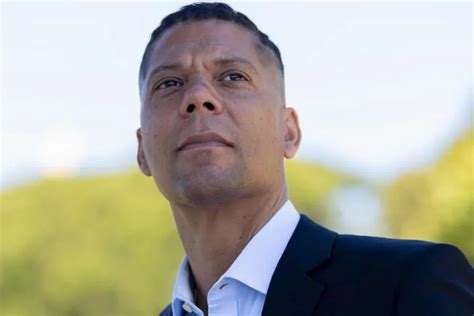
Ramsey Robinson
Campaign or press photo
Peace and Freedom · PSL · Message · Left · Below detection

Ramsey Robinson

Ramsey Robinson is a school social worker in Bayview / Hunters Point, San Francisco, and a member of the Party for Socialism and Liberation (PSL), and he was nominated by the Peace and Freedom Party. His 2026 platform calls for a tax on California's 194 billionaires, 1.4 million public housing units, a guaranteed union job at $30 an hour, and universal health care regardless of immigration status. This is a message campaign, which means a vote for Robinson is not a vote to win the primary but rather a vote to move the public debate and push Democratic candidates to the left, and it should be read in that frame.

What the badges mean
Corporate moneyFunded by corporate PACs and big donors
Criminalize povertyBacks criminal penalties tied to homelessness
Defends immigrantsWants to limit or prosecute ICE in California
Grassroots-fundedRuns on small donors, no corporate or billionaire money
Healthcare for allBacks single-payer healthcare for everyone
Police powerComes from or is backed by police and sheriff power
Pro-ICEWants more state cooperation with ICE
Raise wagesBacks raising the minimum wage
Real estate moneyFunded by real estate and developers
Self-fundedBankrolled by their own personal fortune
Tax the wealthyBacks taxing extreme wealth
Tenant sideBacks rent control and tenant protections
Raised
$67K
Cash
$24K
IE For
$0
IE Against
$0

Ramsey Robinson was born in Hartford, Connecticut, and he moved to Los Angeles as a teenager and lived there for roughly twenty years before relocating to the San Francisco Bay Area, although his exact age and date of birth are not in public reporting.

He earned a Master's in Social Work from Cal State Los Angeles, where as a student he was active in the school's Social Justice Caucus, working on campaigns to destigmatize mental health care and expand campus services, and during his years in LA he worked with unhoused families on Skid Row through Central City Community Outreach.

He now works as a school social worker in SFUSD's Bayview / Hunters Point service area, which is the kind of work that gives him direct contact with Black and migrant working-class students and families, and in that role he founded a Student Socialist Club at his school and has hosted "Know Your Rights" trainings on ICE (Immigration and Customs Enforcement) encounters.

Robinson is a member of the PSL, the Party for Socialism and Liberation, which is a national Marxist-Leninist organization that runs candidates on the Peace and Freedom Party ballot line in California, and he has been visible as an organizer at PSL rallies, including those for Sawandi Toussaint, who was killed by El Monte police, and Banko Brown, who was killed by a security guard at a San Francisco Walgreens, and he has organized at the PSL's annual Black August Education Series.

He has also organized with the Marie Harrison Foundation and Greenaction on environmental-justice campaigns in Bayview / Hunters Point, and he was an organizer and speaker at Bay Area solidarity-with-Palestine demonstrations in 2023 and 2024.

Why he says he's running. His campaign slogan is "California for the people, not the billionaires," and in his October 2025 interview with Davis Vanguard he framed the campaign goal as making sure California is for working people rather than for the billionaires, and in his own words the campaign is a vehicle to put housing, health care, $30-an-hour jobs, child care and guaranteed retirement on the ballot, "regardless of immigration status," through a proposed constitutional amendment to the California Constitution that would move those rights out of the market.

Robinson has never held elected or appointed office at any level of government, because his record is that of a direct-service worker and a protest organizer.

He has not run an institution, managed a budget, or supervised staff at scale, which means there are zero legislative votes to evaluate, zero bills drafted, and zero past executive decisions, but it also means there is zero record of cooperation with corporate, real-estate or police interests. For a message campaign that is coherent, since the campaign argues that the establishment is exactly what is wrong and that a candidate with no prior commitments is exactly what is needed.

YearsRoleWhat he did with that power
~2010-2020Direct-service work in LAWorked with unhoused families on Skid Row through Central City Community Outreach. Mentored foster youth with an emphasis on financial literacy and education.
~2020-presentSchool social worker, SFUSD Bayview / Hunters PointDirect work with Black and migrant students and families. Founded a Student Socialist Club and "Know Your Rights" trainings on ICE encounters.
~2018-presentOrganizer, Party for Socialism and Liberation (PSL)Rallies, speak-outs for victims of police and security-guard violence, Black August Education Series, "Shut 'Em Down" campaign for political prisoners.
2023-presentSolidarity-with-Palestine organizerBay Area demonstrations. Speaker at events.
2025-presentPeace and Freedom Party nominee for CA GovernorPlatform: constitutional amendment to guarantee rights to housing, health care, education, employment, child care, retirement.
How to read this section

The classic establishment question, "does he have the experience to govern?", is the wrong question for a message campaign, because the right question is whether the platform articulates something that needs to be heard and whether the candidate represents it credibly, and his record of work with families on Skid Row, with Bayview students facing ICE, and as a PSL organizer is coherent with the platform, so there are no contradictions between what he says and what he has done.

Robinson's platform is among the furthest-left in the field of Democratic and third-party candidates, and it is built around a proposed constitutional amendment to the California Constitution that would move housing, health care, education, employment, child care and retirement out of the market and treat them as guaranteed rights.

Areas he covers

Tax on CA's 194 billionaires 1.4M public housing units Guaranteed union job at $30/hr Universal single-payer Absolute sanctuary / abolish ICE Abolish private utilities Reparations Free lifelong education End police militarization Constitutional rights amendment

The five most concrete promises

Promise · Taxes and wealth
Tax California's 194 billionaires ($1.2 trillion)
He would tax California's 194 billionaires, who by his framing hold roughly $1.2 trillion combined, in order to fund health care, housing and jobs, and this is the centerpiece from which the rest of the platform branches.
Robinson's defense: he argues that the math is simple, because California has the country's richest billionaires and at the same time the highest cost-of-living-adjusted poverty rate, so the wealth exists and the question is political rather than fiscal.
What a governor can actually do

A governor could sponsor wealth-tax legislation, since previous versions include AB 259 and ACA 3 from 2023, could back a ballot initiative, could direct the Franchise Tax Board to model implementation, and could use the bully pulpit.

Hard limit

It would face legal challenges on federal due-process and apportionment grounds, and previous California wealth-tax bills have not passed the Legislature, so it would likely require a constitutional amendment through a two-thirds legislative vote plus a statewide ballot, or else a citizens' initiative. Historically billionaires threaten to move to Texas or Florida, and although that threat is overstated, it is still used.

Impact for our community if delivered

$1.2 trillion in assets is not theoretical, because it is the material base for public housing, universal health care and decent wages, so if that wealth were redirected to public service, then for SELA families it would mean guaranteed medical coverage, affordable public housing near jobs, better-funded schools, and a $30 wage floor that changes lives.

Promise · Housing
1.4 million public housing units, rent freeze day one
He would declare a housing emergency on day one, freeze rents, evictions and foreclosures statewide, cancel rent and mortgage payments for those hardest hit, and build 1.4 million public housing units that are, in his words, "truly affordable."
Robinson's defense: he says this is housing at cost rather than for profit, modeled on pre-Thatcher European public housing or on modern Vienna, where roughly 60% of residents live in public or subsidized housing, and where rent is often a limited share of the tenant's income.
What a governor can actually do

A governor could issue an emergency proclamation under the Emergency Services Act, similar to the COVID-era eviction moratoria, could direct HCD to prioritize public-housing funding, and could use state land for public housing.

Hard limit

A statewide rent-and-mortgage cancellation would face litigation under the Contracts Clause and federal mortgage-servicing law, and Costa-Hawkins limits rent control on units built after 1995, so it would require repeal. Building 1.4 million public units requires legislative appropriation in the tens to hundreds of billions, along with local land-use cooperation.

Impact for our community if delivered

SELA is renter-dominated, with tenants paying more than 40 to 50% of their income on rent, so public housing at 25% of income would free up thousands of dollars a year per family, and for mixed-status families it would mean public housing that is not conditioned on immigration status, while for tenants in buildings whose landlords push rents up aggressively, the moratorium would be immediate relief.

Promise · Health
Universal single-payer, no copays or premiums, regardless of status
In his words, "universal single-payer health care, free for every Californian, no fees, no premiums, no deductibles, and all covered regardless of immigration status," with Medi-Cal expanded to cover everything.
Robinson's defense: he follows the AB 1400 framework, and what is distinctive is the explicit "regardless of immigration status" affirmation along with the zero-copay guarantee, which makes it the most expansive single-payer version in the field.
What a governor can actually do

A governor could sign single-payer enabling legislation along the lines of the AB 1400 framework, could seek federal waivers under section 1332 and Medicaid 1115, and could direct DHCS to consolidate state coverage programs.

Hard limit

Federal ERISA preemption blocks state regulation of self-funded employer plans, which cover roughly half of insured workers, and the financing mechanism needs a two-thirds vote or a ballot measure, while previous California single-payer bills, including SB 562 in 2017 and AB 1400 in 2022, died in the Legislature.

Impact for our community if delivered

For SELA mixed-status families, "regardless of immigration status" is the difference between having coverage and not having it, and for families with undocumented parents who pay cash at community clinics today, it would mean full coverage including dental, vision and mental health, while for informal-economy workers it would be a way out of limited Medi-Cal and into the universal system.

Promise · Jobs and wages
Guaranteed union job for every worker at $30/hour
He proposes a state jobs program that guarantees a union job for every worker at a minimum of $30 an hour, which is one of the highest wage planks in any 2026 gubernatorial campaign in the United States.
Robinson's defense: he argues that $30 an hour is the level at which a single worker can sustain themselves in California, and that anything less is a public subsidy, through CalFresh and Medi-Cal, to employers paying poverty wages, and that the union guarantee is the difference between a real right and a paper one.
What a governor can actually do

A governor could propose a budget for a state public-works employer, could set a $30 prevailing wage on state-funded projects, and could direct state procurement toward union contractors.

Hard limit

Budget approval requires the Legislature, and a universal $30 jobs guarantee has no current funding source without the wealth tax, while private-sector wage floors above the statutory minimum require legislation.

Impact for our community if delivered

SELA's median wage is around $19 an hour, so $30 an hour with a union would be more than a 50% income raise for a typical working family, and for Latina working women in domestic cleaning, child care and fast food, the change in daily life would be material, while the job guarantee removes employer blackmail.

Promise · Immigration
Absolute sanctuary: zero cooperation with ICE in CA
He would enforce California as a true sanctuary state, ban ALL cooperation with ICE (Immigration and Customs Enforcement) by police and by any agency or institution that receives state funds, prosecute and decertify officers who collaborate with ICE, and shut down ICE detention centers in California.
Robinson's defense: he argues that SB 54 has carveouts that police exploit to hand people over to ICE, that closing those carveouts is concrete action, and that the decertification of officers who collaborate has precedent.
What a governor can actually do

A governor could issue an executive order to all state agencies cutting data-sharing with ICE, could end the use of state-funded facilities for ICE detention, could condition state contracts on non-cooperation, and could direct the Attorney General to investigate sheriff transfers.

Hard limit

Federal law preempts state interference with immigration enforcement, and ICE retains its own federal personnel and facilities, while SB 54 sets a state-law floor that includes carveouts the Legislature would have to close, which means a governor cannot literally "abolish" ICE, because it is a federal agency.

Impact for our community if delivered

SELA is one of the communities hardest hit by LAPD and sheriff collaboration with ICE, so zero cooperation would mean zero notifications to ICE of jail release dates, zero ICE access to state facilities, and zero DMV data sharing, and for mutual-aid networks like Union del Barrio it would mean legal protection for their work.

Robinson does not face the media attacks that the frontrunners do, since he is not a target of organized business opposition, of critical mainstream news coverage, or of attacks from opponents at debates, and the critique he does face is the "you can't win" kind, which we name honestly here.

Attack 1 · "Wasted vote"
"He can't win, voting for him is a wasted vote"
This is the most common critique of any third-party candidate in California, because he does not show up in polls, since he is below the detection threshold, he has not been invited to the main debates, and in the top-two primary only the two highest vote-getters advance to November, which leaves no realistic path for him and raises the question of why anyone would vote for him.
Robinson's defense: he says this is a message campaign and not a campaign to win the primary, and its purpose is, first, to put the billionaire-tax and public-housing debate into public discourse, second, to build PSL and PFP infrastructure for future campaigns, and third, to give left voters a vote that reflects their values rather than a "less bad" vote.
The facts as we investigated them

Robinson is 1 of 61 candidates in the June 2 primary field, he is below the detection threshold in polls, and he has not been invited to the major Democratic primary debates, with total fundraising of $67K. In California the top-two primary system means the two candidates with the most votes in June advance to the general regardless of party, and recent polling has put Republican Steve Hilton among the leaders alongside Democrats Xavier Becerra and Tom Steyer, so the likely November matchup is one Republican against one Democrat rather than two Democrats.

Community impact if the critique holds

For left voters in SELA the "wasted vote" question is real, because if the primary comes down to Steyer, a self-funded billionaire, and Becerra, a moderate Democrat, and Robinson receives 0.5%, the question is what impact that has. The message-campaign argument is that Robinson's vote share does matter as a signal of left demand, since if he receives 2 to 5% that is a public signal that the Democratic base wants more radicalism, while if he receives 0.1% that signal does not land.

Why the defense has merit (partial)

The history of California third-party campaigns shows that they have moved the debate, since Ralph Nader in 2000 pushed Democrats left on environmental issues, and Bernie Sanders in 2016, though he ran as a Democrat, moved the discourse on universal health care, so a PSL/PFP campaign with a meaningful vote share establishes a visible record of left demand. But it is also true that a vote for Robinson does not elect the governor, and both of those things are true at once.

Attack 2 · Feasibility of the proposals
"The platform is impossible to implement"
The common critique is that the wealth tax faces serious legal challenges, that 1.4 million public housing units would cost hundreds of billions, and that taking over the IOUs, the investor-owned utilities, would require either legislation with funding or eminent domain with tens of billions in just-compensation payments, which all comes down to the question of how he pays for it.
Robinson's defense: he says the wealth tax pays for it all, because the $1.2 trillion in assets held by California's 194 billionaires is the base, and he points out that the "how do you pay" question rarely gets applied to the opposition, since no one asks how Steyer pays for a campaign approaching $200M or how California pays for a budget above $300B a year.
The facts as we investigated them

The legal challenges to the wealth tax are real, because the federal Due Process Clause limits its application to non-residents and out-of-state assets, and AB 259 and ACA 3 from 2023 did not pass the Legislature, while Costa-Hawkins would need to be repealed. Taking over the IOUs would require either legislative authorization with funding or eminent-domain proceedings with tens of billions in payments, and FERC retains jurisdiction over wholesale markets and transmission.

Community impact if the critique holds

If the platform is genuinely impossible, then voting for Robinson is a symbolic exercise, but if it is hard yet possible, then voting for him is an investment in moving the debate, and the line between the two depends on how much vote share he gets, since a sufficient percentage changes the political math for the Legislature. For SELA, where the needs are material and urgent, the question is whether the long-term message matters more than a pragmatic vote now.

Why the defense has merit (partial)

The "it's impossible" complaint has historically been applied to almost every structural reform before it passed, including Medicare, Social Security and voting rights, and people who say "impossible" rarely name what they would consider possible instead. Robinson does name alternatives, since his platform is the opposite of the status quo, and the status quo always calls that impossible.

Attack 3 · "Socialist" label
"The PSL is Marxist-Leninist, too radical for California"
This is a critique from the center, because the Party for Socialism and Liberation is a Marxist-Leninist organization, and for many California voters, especially immigrant communities from countries where "socialism" carries traumatic associations, such as Cuba, Nicaragua and Venezuela, that label is disqualifying.
Robinson's defense: he is transparent about his PSL affiliation, and he argues that the platform is what he is running on, so the material programs, meaning public housing, universal health care and $30 wages, are what matter rather than the label, and he argues that the PSL's fight has been against US imperialism rather than against the immigrants who escaped that imperialism.
The facts as we investigated them

The PSL is a national Marxist-Leninist organization, Robinson is an open member, and PSL National has promoted his candidacy, but the concrete policies in his platform, meaning the wealth tax, public housing, universal health care and $30 jobs, are left social-democratic policies rather than central-planning communism, so there is a real difference between the party's organizational theory and the campaign platform.

Community impact if the critique holds

For Cuban, Venezuelan and Nicaraguan immigrants in SELA, the "socialist" label carries real emotional weight, so Robinson's campaign has to decide whether to confront that association directly or to leave it alone, and for Mexican and Central American immigrants, who are the SELA majority, the label has different associations, since some resonate with AMLO, Sandinismo or Allende while others do not, so it is not uniform.

Why the defense has merit (partial)

Transparency has value, and Robinson does not hide his affiliation, and the concrete policies he advances are the kind implemented in Western social-democratic countries like Denmark, Germany and Vienna without collapse, so the platform is not Venezuela or Cuba but rather Vienna with American public services. If voters respond better to the platform than to the label, that is itself an argument for the platform.

Robinson has raised $67K, a tiny fraction of what every major-party candidate in this race has raised, since Steyer has self-funded a campaign approaching $200M and even the lower-funded Democrats in the main field have raised in the hundreds of thousands to low millions of dollars, and this is what a campaign with no corporate PAC, no large-donor money, and no labor-PAC infrastructure looks like, so here is the full picture.

Money coming in

ItemAmountNotes
Total raised through April 18, 2026$67,384Grassroots fundraising, no large donors
Cash on hand$24,403Limited reserve for the final month
Total spent$43,174Materials, online platform, events
Corporate PAC$0Zero by campaign policy

Online donations run through eFundraising Connections, the same small-donor platform other PFP and PSL campaigns use.

Outside independent expenditures (IE)

IE = Independent Expenditure: committees that spend for or against without legally coordinating with the campaign. Zero IE in favor of or against Robinson in CAL-ACCESS as of May 20, 2026. The absence of IE against him reflects his standing in polls, business opposition does not see him as enough of a threat to spend on. The absence of IE in favor reflects that the PSL and PFP do not run IEs at scale.

Formal endorsements

  • Peace and Freedom Party (PFP): endorsed gubernatorial nominee. The PFP is California's oldest ballot-qualified left party.
  • Party for Socialism and Liberation (PSL): Robinson is a member and PSL National has promoted his candidacy.
  • Vote Socialist California 2026: listed at ramsey4gov.com/endorsements.
  • Left Unity Slate context: on November 30, 2025, the PFP and the Green Party of California agreed on a cross-ballot slate for lesser statewide offices. For governor, the PFP endorsed Robinson and the Green Party endorsed Butch Ware. The two parties did not converge on a single gubernatorial candidate.
  • Unions: none publicly announced. AFL-CIO, SEIU California, UTLA, CFT have not endorsed Robinson.
  • Elected officials: none publicly announced.

Outside scorecards

No progressive, labor, environmental or business scorecard has rated Robinson, because he has no legislative record to score, and the established scorecard organizations, including CLCV, LCV, the California Labor Federation, Equality California and Planned Parenthood Affiliates of California, rate on votes rather than on platform positions for non-incumbents.

OrganizationTypeStatus
BallotpediaCandidate profileProfile published
BallotReadyCandidate profileProfile published
Vote Smart / OnTheIssuesQuestionnaireNo response located
iSideWithAlignment quizCandidate page published

How to read the money here

Robinson has raised roughly $67,000 while Steyer has self-funded a campaign approaching $200 million, which is a ratio of roughly 1 to 3,000, so the question is not whether Robinson can compete financially, because he cannot, but rather whether his vote share in a 61-candidate primary can serve as a public signal of left demand. For a message campaign, $67K is coherent with the model, since it reflects small donors, volunteer labor, PFP and PSL party infrastructure, and no corporate capture.

Full list of scorecards tracked on the scorecards page.

Sources and citations ramsey4gov.com · About Ramsey · Endorsements · Donation portal · Davis Vanguard, October 2025 · Solano Pulse, March 2026 · Ballotpedia · Ramsey Robinson · BallotReady · profile · PFP candidate statement · PFP · Left Unity · Independent Political Report · Left Unity Slate · PSL National on X · Ballot Access News · PFP declares · Wikipedia · 2026 gubernatorial election · Ballotpedia · 61 primary candidates · Time, May 2026 race standing · CBS News · candidates on ICE and health · Capitol Weekly · Black voter forum · The Observer · accountability forum · LAist · 2026 voter guide · CalMatters · 2026 Guide · Factually · who is Robinson · The Ballot Book · committee finances · Transparency USA · committee 1481346 · CAL-ACCESS portal · Instagram @ramsey4gov · YouTube @Ramsey4gov · TikTok @ramsey4gov

This guide is free. If it helps you, chip in to keep it that way.