DRAFT · Community review in progress. See something that looks wrong? Tell us.
Español English
Community Dashboard
Primary June 2, 2026
Updated May 20, 2026
Member Portal
This guide is free. If it helps you, help us keep it going.Support our work
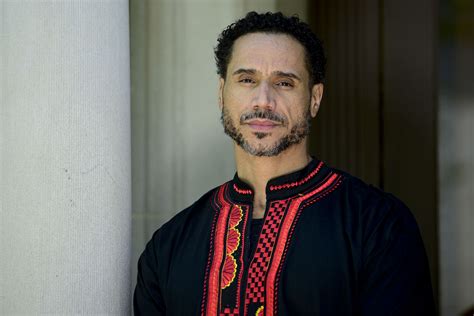
Butch Ware
Campaign or press photo
Green · Write-in · Removed from ballot by SB 27

Butch Ware

Butch Ware is a tenured UC Santa Barbara professor of African and Islamic history, the California Green Party nominee for governor in 2026, and the vice-presidential running mate to Jill Stein on the 2024 Green Party ticket. His platform calls for a permanent ceasefire in Gaza, CalCare (California single-payer), Vienna-style social housing, and fossil-fuel divestment, and his platform is among the furthest-left in the field. He was removed from the primary ballot under SB 27, the state's tax-return disclosure law, and the case is currently in federal litigation, which means that to vote for him you have to write his name on the ballot.

What the badges mean
Corporate moneyFunded by corporate PACs and big donors
Criminalize povertyBacks criminal penalties tied to homelessness
Defends immigrantsWants to limit or prosecute ICE in California
Grassroots-fundedRuns on small donors, no corporate or billionaire money
Healthcare for allBacks single-payer healthcare for everyone
Police powerComes from or is backed by police and sheriff power
Pro-ICEWants more state cooperation with ICE
Raise wagesBacks raising the minimum wage
Real estate moneyFunded by real estate and developers
Self-fundedBankrolled by their own personal fortune
Tax the wealthyBacks taxing extreme wealth
Tenant sideBacks rent control and tenant protections
Raised
N/A
Corp. PAC
$0
IE For
$0
IE Against
$0
How to vote for Ware: write-in

Ware was removed from the June 2 primary ballot by the Secretary of State on March 16, 2026, citing an issue with his tax returns under SB 27, so to vote for him you have to write his name on the ballot, which means going to the blank space at the end of the candidate list in the governor section and writing BUTCH WARE clearly. Ware filed his official Statement of Write-In Candidacy with the Secretary of State ahead of the May 19, 2026 deadline, so he is a registered write-in candidate and a vote written in for him is counted in the official results, and his campaign site lays out the specific instructions at butchware4gov.com/write-in.

His campaign filed a federal lawsuit, Ware v. Weber, Case 2:26-cv-01643, arguing that SB 27 violates the First and Fourteenth Amendments, and on May 11, 2026 Senior District Judge William B. Shubb denied the campaign's emergency motion to restore him to the June ballot, a ruling that turned only on timing because vote-by-mail ballots were already in circulation and that did not decide the constitutional question, so Ware remains a write-in candidate while the main case continues on its merits.

Rudolph "Butch" T. Ware III, who is also known as Bilal Ware in the American Muslim community, was born in 1974, and he lived a childhood of housing insecurity, constantly moving between shelters, relatives' homes, public housing and other unstable situations, while his father struggled with mental-health and addiction issues and lived on the streets at times.

He studied at the University of Minnesota, where he earned his B.A., and then earned his Ph.D. in History at the University of Pennsylvania in 2004, and he is now a tenured associate professor in the History Department at UC Santa Barbara, where he teaches Islamic intellectual history, African and African-American studies, antislavery movements in West Africa and the African Diaspora, and revolutionary political thought. He is also the founder and director of ISRAR, the Initiative for the Study of Race, Religion, and Revolution.

He is the author of two peer-reviewed academic monographs, Jihad of the Pen: The Sufi Literature of West Africa (2018) and The Walking Qur'an: Islamic Education, Embodied Knowledge, and History in West Africa (2014), and he is a convert to Islam who uses the name "Bilal Ware" in the Muslim community. He is also one of the two members of the hip-hop duo Slum Prophecy, which released an 11-track album called "Aqsa Flood" in the summer of 2024.

Political trajectory. Ware was selected on August 16, 2024 by Jill Stein as the 2024 Green Party vice-presidential running mate, and the Stein-Ware ticket received 862,049 votes nationwide, which was 0.56% of the popular vote, and then on November 11, 2024 Ware announced his candidacy for governor of California.

Why he says he's running. The campaign slogan is "Return power to the people and build a California that serves everyone, not just corporations and billionaires," and his intellectual and activist emphasis on decolonization, anti-imperialism and solidarity with Palestine is central to the campaign rather than secondary to the rest of the platform.

Ware has never held elected office at any level of government, because his experience is academic and intellectual rather than administrative or legislative.

His record is one of thought, writing and research on subjects that most gubernatorial candidates rarely touch, including African Islamic history, antislavery movements, anti-imperialism, decolonization, and the Black radical tradition, and for a Green campaign that is the coherence that matters, since the thought platform sustains the policy platform.

YearsRoleWhat he did with that power
2004Ph.D. in History, U. PennsylvaniaDissertation on the Sufi intellectual tradition in West Africa.
~2018-presentTenured professor, UC Santa BarbaraAfrican and Islamic history, antislavery movements, revolutionary thought. Founder of ISRAR.
2014Publication: The Walking Qur'anPeer-reviewed monograph on Islamic education and embodied knowledge in West Africa.
2018Publication: Jihad of the PenSecond monograph on West African Sufi literature.
2024 (August)Green Party VP nominee with Jill SteinNational ticket. 862,049 votes (0.56%).
2024 (November)-presentCalifornia gubernatorial candidate, Green PartyRemoved from primary ballot by SB 27, March 2026. Registered write-in candidate. Federal emergency motion denied May 2026; main case pending.

How to read this section. Ware has no executive or legislative experience, and that is simply factual, but what he does have is a coherent, published intellectual record on subjects that most Democrats sidestep, including Palestine, anti-imperialism and the Black radical tradition, so for voters who want articulation rather than management, that is what he offers.

Ware's platform is to the left of the major Democratic field on every axis, since the Gaza ceasefire is not a footnote but is central, and he also supports CalCare single-payer, Vienna-style social housing, and a climate emergency declaration. The difference with Robinson is one of tone and ideological lineage, because Robinson comes from the Marxist-Leninist tradition while Ware comes from the Green, Black anti-imperialist and academic tradition.

Areas he covers

Gaza ceasefire (center) CalCare / single-payer Vienna-style social housing Convert 1.2M vacant corporate units State student-debt cancellation Free CSU and community college Climate emergency Ranked-choice voting (RCV) Zero corporate PAC Anti-imperialism

The five most concrete promises

Promise · Gaza and foreign policy
Permanent ceasefire in Gaza, end US military aid to Israel
This is the centerpiece of Ware's platform rather than a footnote, and it calls for a permanent ceasefire, an end to US military aid to Israel, Palestinian self-determination, and the right of return, and in his words, "Ending apartheid, occupation, settler colonialism and establishing a free Palestine, from the river to the sea, with right of return ... that is what Palestinians have been struggling for."
Ware's defense: he is one of the few gubernatorial candidates in any state who has made Gaza the central moral axis of his campaign, and he has a pre-campaign activist record on it, because he was a prominent voice on Gaza in the 2024 presidential race.
What a governor can actually do

Foreign policy is federal, but a California governor can still direct CalPERS and CalSTRS, the state pension funds that hold hundreds of billions in assets, to divest from companies profiting from the occupation, and can direct the state's trade office, can use the bully pulpit, and can deny state contracts to companies breaking international human-rights law.

Hard limit

US military aid to Israel is a federal decision made by Congress and the President, so a governor cannot end it, and California also has anti-BDS laws, meaning Boycott, Divestment and Sanctions laws, on the books that limit certain specific state actions against Israel, and Ware's platform does not detail a specific CalPERS or CalSTRS divestment plank.

Impact for our community if delivered

For Arab, Palestinian and Muslim families in SELA, a public voice from California's governor in favor of a ceasefire would be symbolically meaningful, and CalPERS or CalSTRS divestment would carry material market impact. For Jewish communities the response is not uniform, since progressive Jews and Jews critical of Israel would support it while others would oppose it, and Ware's platform does not explicitly alienate the Jewish community although it is direct in its critique.

Promise · Health
CalCare (AB 1900), universal single-payer, regardless of status
On day one he would issue an executive order declaring a state public-health emergency in order to immediately expand Medi-Cal to every California resident regardless of income or immigration status, and he would push for the passage of AB 1900, known as CalCare, for universal single-payer.
Ware's defense: the plan includes the integration of mental-health and addiction treatment, which connects to his personal record, since his father struggled with those conditions and lived on the streets, so the policy is tied to lived experience.
What a governor can actually do

A governor could sign AB 1900, the CalCare bill, if the Legislature passes it, could seek federal waivers under sections 1332 and 1115, could declare a public-health emergency, and could direct DHCS to expand Medi-Cal.

Hard limit

California single-payer faces the same obstacles for Ware that it faces for any candidate, meaning federal ERISA preemption, the need for a two-thirds vote or a ballot measure, and an annual cost of $300B-$400B, and while AB 1400 died in 2022, AB 1900 is pending but has not passed.

Impact for our community if delivered

For mixed-status families it would mean coverage regardless of immigration status, and for families with parents struggling with addiction or mental health, the explicit integration of those services into CalCare is notable, because most single-payer proposals do not name them explicitly, and all of this matters for SELA, where private coverage is scarce and Medi-Cal has gaps.

Promise · Housing
Convert 1.2M vacant corporate units into Vienna-style social housing
California has roughly 1.2 million vacant homes according to Census figures, and Ware's campaign frames these as corporate-owned and proposes escalating vacancy taxes on private-equity landlords, naming firms such as Blackstone, so that the taxes pressure them to sell to the state, where the homes would be converted into at-cost-operated social housing, on the model of Vienna, Austria, where roughly 60% of the housing stock is public or subsidized and many tenants pay about a quarter of their income in rent.
Ware's defense: he argues that it is a proven model at European scale, so the question is not whether it works, since it works in Vienna and has worked for decades, but rather whether California has the political will to apply it.
What a governor can actually do

A governor could sign legislation taxing vacant corporate properties, could direct HCD to set up a state social-housing authority, could use state land, and could seek legislative authorization to issue bonds for acquisition.

Hard limit

Forcing a sale through taxation requires a solid legal basis, or else it faces litigation under the Takings Clause, and acquisition financing at the scale of 1.2 million units runs into the tens of billions, while "operated at cost" requires administrative infrastructure that the state does not currently have.

Impact for our community if delivered

SELA has vacant units in buildings owned by real-estate corporations and private-equity firms, so conversion to at-cost social housing would mean rent at 25% of income, which is a material change for working families currently paying 40 to 50%, and the presence of a public market competing with the private one would lower private rents too.

Promise · Education
Cancel state student debt, free CSU and community college
He would cancel the student debt that the state holds, make CSU universities and community colleges free with zero tuition, and put money back into classrooms rather than into administrator salaries.
Ware's defense: he speaks with his own authority as a university professor in the UC system, because he knows from the inside the administrative inflation, the dependence on tuition fees, and the material harm of student debt.
What a governor can actually do

A governor could sign legislation canceling state debt, could negotiate with the UC Regents and CSU Trustees, whose appointments a governor partly controls, on tuition, and could propose budgets that replace tuition revenue with state funding.

Hard limit

The UC Regents are constitutionally autonomous, so the governor appoints them but does not control them, and community college and CSU tuition is more reachable but still requires the budget to replace the lost revenue, while federal student debt, which is the majority of it, cannot be canceled at the state level.

Impact for our community if delivered

SELA students at East LA College, ELAC, LA Trade-Tech and other local community colleges would have free education, and for families with kids at CSU LA, CSUN or CSU Long Beach it would mean roughly $7,000 a year per student in tuition eliminated, while canceling state student debt would free up monthly income for young professionals.

Promise · Climate
Declare climate emergency and divest from fossil fuels
He would declare a climate emergency, which would unlock emergency authority to fast-track green infrastructure, transit and environmental protection, and he would end California's dependence on fossil fuels, hold corporate polluters accountable, and invest in clean energy.
Ware's defense: the climate-justice frame is explicit, because Black, Brown and working-class communities suffer first and worst from environmental harm, so for him it is not just climate policy but environmental decolonization policy.
What a governor can actually do

A governor could declare a climate emergency by executive order, which has no clear legal precedent but is plausible, could direct CalGEM to stop issuing new oil and gas well permits, could appoint CARB and CPUC members with a climate commitment, and could use the budget for transition jobs.

Hard limit

Existing oil and gas wells are contracts that cannot be unilaterally voided, federal preemption limits some regulation, and FERC retains jurisdiction over wholesale energy, while Ware's platform does not detail a specific "just transition" mechanism for workers currently in fossil-fuel jobs.

Impact for our community if delivered

SELA sits next to the Wilmington industrial corridor, the ports of LA and Long Beach, refineries and heavy freight warehouses, and its air pollution is among the worst in the state, so a brake on new well permits and tougher enforcement against corporate polluters would be material for childhood asthma, cancer and respiratory illness in the community.

Ware does not face the media attacks that the frontrunners do, since he is not a target of organized business opposition or of critical mainstream news coverage, and the critique he does face is of three kinds, namely "you can't win," "your removal from the ballot disqualifies you," and "your position on Israel is polarizing," and we name all three honestly here.

Attack 1 · Removed from ballot
"If you're not on the ballot, you can't win, wasted vote"
On March 16, 2026, Secretary of State Shirley Weber removed Ware from the June 2 primary ballot over a tax-return issue under SB 27, and a Sacramento Superior Court rejected his challenge on March 26, so Ware filed a federal lawsuit, and on May 11, 2026 a federal judge denied his emergency motion to be restored to the June ballot, so his name does not appear on the ballot and voters have to write him in.
Ware's defense: he says the Secretary of State's office gave him contradictory deficiency notices over a 10-day window in March, culminating in a final notice at 4:50 p.m. on March 16, which was the deadline, demanding a fix by 5:00 p.m., a window of only 10 minutes, and his federal lawsuit argues that SB 27 violates the First and Fourteenth Amendments, and his campaign stresses that the May 11 ruling turned only on timing and left that constitutional question undecided, so the case continues.
The facts as we investigated them

He was removed from the ballot on March 16, his state court challenge was rejected on March 26, and his federal lawsuit, Ware v. Weber, Case 2:26-cv-01643 WBS SCR, in the U.S. District Court for the Eastern District of California, argues a violation of the First and Fourteenth Amendments. On May 11, 2026 Senior District Judge William B. Shubb denied the campaign's emergency motion to restore Ware to the June ballot, a four-page order that turned only on timing, since vote-by-mail ballots were already in circulation, and that did not rule on whether SB 27 is constitutional, so the main case continues, and because he is a write-in it requires every voter to write his exact name, BUTCH WARE.

Community impact if the critique holds

The extra effort required to write his name on the ballot is a real barrier, because voters with low literacy, voters who vote by mail and skim the instructions, and voters who are in a hurry may not complete the write-in correctly, and for SELA, where English is not always the primary language, English write-in instructions add another layer of difficulty.

Why the defense has merit (partial)

The 10-minute window to fix deficiencies after contradictory notices raises questionable due process, and SB 27 has been criticized as a tool to exclude non-Democratic candidates, and although the May 11 ruling means Ware will not be restored to the June ballot, the court left the constitutional question open, so if Ware ultimately wins the federal suit it will set a precedent on third-party ballot access for future California elections.

Attack 2 · Position on Israel
"His statements on Israel are polarizing"
This is a critique from the center and from some Jewish sectors, since Jewish Insider and others have published coverage flagging Ware's statements during the 2024 presidential campaign as being perceived to celebrate resistance to the Israeli state, and his call for a free Palestine "from the river to the sea" is read by some as a call for the elimination of Israel.
Ware's defense: he has explicitly disputed the Jewish Insider characterizations, arguing that "from the river to the sea, with the right of return" is a historical Palestinian frame for self-determination rather than elimination, and he distinguishes between criticism of the Israeli state and criticism of the Jewish people, and he speaks regularly against antisemitism, although he does not back away from his critique of apartheid, occupation and settler colonialism.
The facts as we investigated them

Ware has called for a permanent ceasefire, an end to US military aid to Israel, Palestinian self-determination and the right of return, and he hosted a "From Grassroots to Gaza" panel in October 2025, and he has been interviewed by Democracy Now, Palestine Chronicle and Black Agenda Report on these positions, while critical coverage from Jewish Insider (October 2024) also exists, although Ware's campaign disputes that characterization.

Community impact if the critique holds

For Jewish families in SELA, especially Sephardic and Mizrahi families, Ware's position can be polarizing, while for Arab, Palestinian and Muslim families his position is a relief after years of Democratic candidates dodging the topic, and the political question is whether a governor can hold both communities, since the historical answer is that most candidates dodge it rather than articulate a position.

Why the defense has merit (partial)

Ware is a convert to Islam and a scholar of Islamic history, so his statements carry intellectual and community context that goes beyond electoral politics, which means they are not casual statements, and the distinction between critique of the Israeli state and antisemitism is real and is accepted by many progressive Jewish scholars. But the line between "from the river to the sea" as self-determination and "from the river to the sea" as elimination is disputed in good faith on both sides.

Attack 3 · Write-in viability
"Write-in campaigns in California essentially do not win"
Historically, California write-in campaigns for major statewide offices have not been successful, because the barrier of each voter having to write the name correctly, combined with the lack of ballot exposure, keeps the write-in vote ceiling very low, which raises the fair question of whether the write-in vote has any value beyond the symbolic.
Ware's defense: he frames this as a message campaign plus a live legal case, where the write-in vote demonstrates concrete Green and left demand, and although the court declined to restore his name to the June ballot, the campaign points to California's top-two primary, under which a write-in candidate who finishes in the top two still advances to the November general election, so the electoral effort keeps the campaign alive while the constitutional case proceeds.
The facts as we investigated them

Write-in campaigns for major statewide office in California have not won in recent history, and the Stein-Ware ticket in 2024 received 0.56% nationally, while Ware as a write-in polls well below the detection threshold in statewide polls, and although the federal court denied his emergency motion on May 11, 2026, the underlying federal lawsuit remains active.

Community impact if the critique holds

For SELA voters who identify with the Green and anti-imperialist platform but do not want to "waste" their vote, the decision is real, and the argument is similar to Robinson's, because if the Green vote is 0.1% the message does not land, while if it is 2 to 5% it does, and the difference with Robinson is that Ware has to be written in, which lowers the ceiling.

Why the defense has merit (partial)

The federal case is historic, because regardless of the June outcome, the decision on SB 27 will have effects on future third-party elections in California, and the Green platform has moved the Democratic debate on climate since Nader in 2000. For left voters who are not drawn to the PSL or PFP through the Marxist-Leninist association, Ware is the Green alternative, more academic, more focused on Palestine, and more focused on climate.

Ware has the least transparent fundraising of the field, because his campaign accepts zero corporate PAC money and every dollar comes from regular people through Zeffy and Action Network, and aggregate totals are not published in mainstream sources, so here is what is documented.

Money coming in

ItemAmountNotes
Total raised (public)N/ANot published in mainstream aggregators as of May 2026; cagovtracker does not list Ware among its tracked candidates
Corporate PAC$0Explicit campaign policy
Donation platformN/AZeffy and Action Network, small individual donors
Stein-Ware 2024 result0.56% nationwide862,049 votes for the presidential ticket

For itemized data, individual campaign-committee reports must be consulted. Aggregators like CalMatters and Transparency USA do not have consolidated public totals for Ware as a write-in candidate.

Outside independent expenditures (IE)

IE = Independent Expenditure: committees that spend for or against without legally coordinating with the campaign. Zero IE in favor of or against Ware is documented in CAL-ACCESS as of May 20, 2026. Business opposition does not see him as a threat. The Green infrastructure does not run IEs at scale.

Formal endorsements

  • California Green Party: official 2026 gubernatorial nominee.
  • SF Bay View National Black Newspaper: explicit endorsement.
  • Green Party of Santa Barbara County: guest-commentary endorsement.
  • Arab & Muslim American Green Party Caucus: endorsement.
  • Left Unity Slate context: on November 30, 2025, the California Green Party and the Peace and Freedom Party agreed on a cross-ballot slate for lesser statewide offices. For governor, the Green Party endorsed Ware and the PFP endorsed Ramsey Robinson. They did not converge on a single candidate.
  • Left media coverage: Black Agenda Report, Current Affairs, Palestine Chronicle (interviews and profiles).
  • Unions: none publicly announced.
  • Elected officials: none publicly announced.

Outside scorecards

Like Robinson, Ware has no legislative record to score, and the established scorecards, including CLCV, LCV, the California Labor Federation and Equality California, do not rate non-incumbents on their platform.

OrganizationTypeStatus
BallotpediaCandidate profileProfile published
California Green PartyParty endorsementFull endorsement
SF Bay ViewMedia endorsementEndorsement
Vote Smart / OnTheIssuesQuestionnaireNo response located
iSideWithAlignment quizCandidate page published

How to read the money here

Ware runs a Green small-donor campaign with zero corporate PAC money, and the lack of public aggregate totals reflects both the write-in scenario and the Green Party's limited infrastructure for reporting to aggregators, so for voters who want financial transparency this is a legitimate limitation, while for voters who weigh corporate independence, the $0 in corporate PAC money is a signal coherent with the platform.

Full list of scorecards tracked on the scorecards page.

This guide is free. If it helps you, chip in to keep it that way.